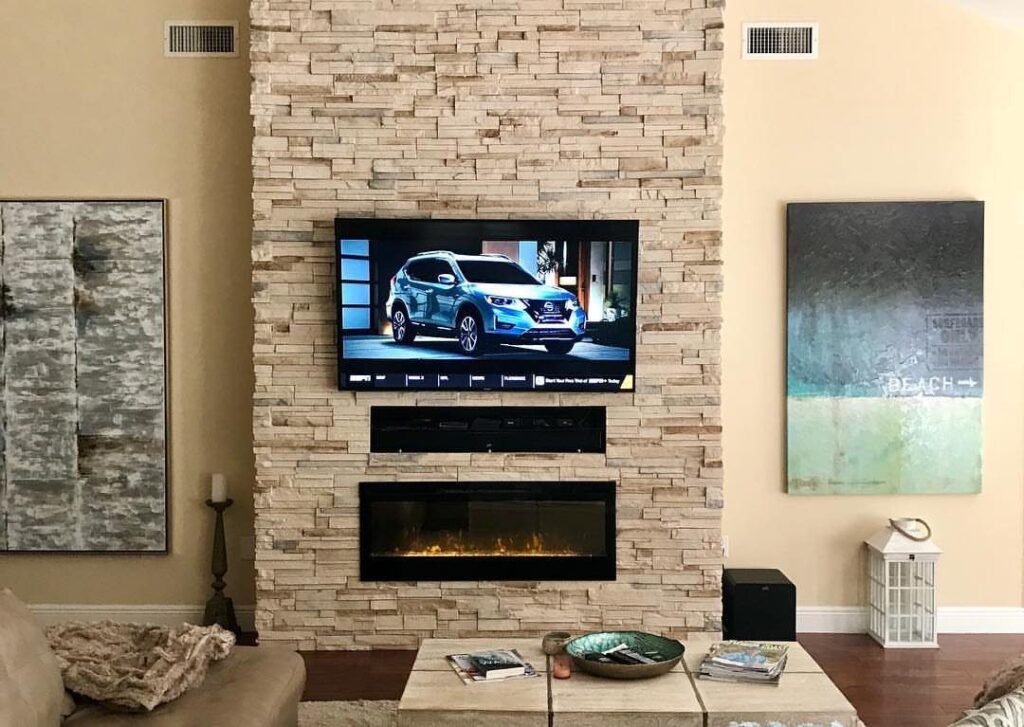
The fuel decides this choice before the style does: an electric unit sends very little heat upward, so it is the safest partner for a screen above it, while gas or wood needs a deep mantel or a heat deflector between the firebox and the TV.
Below I cover recessed built-ins, linear wall mounts, shiplap and stone surrounds, floating mantels, wood slat accent walls, and the design and placement questions that come up once you commit to putting a screen above the fire.
Check the clearances in both manuals before any drilling starts.
1. Recessed Built-In Fireplace with TV Above
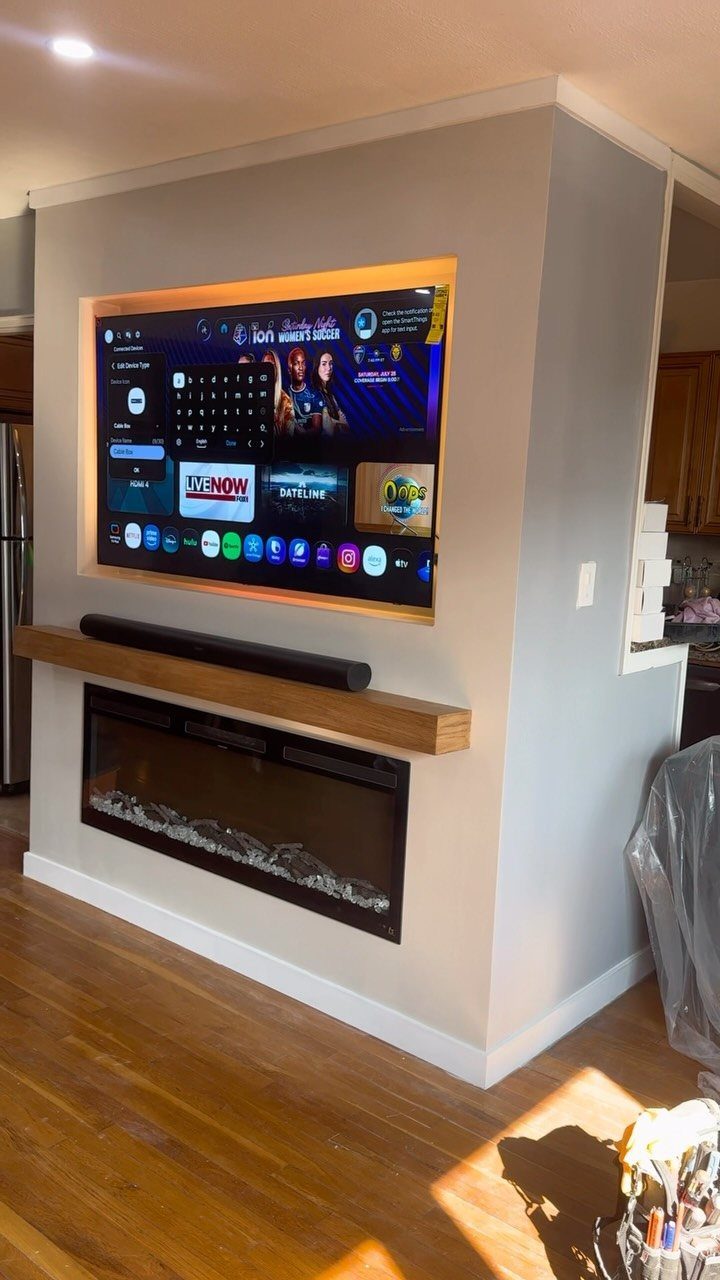
A recessed niche is the cleanest way to keep a TV and fireplace from stacking into a tall, heavy column.
Sinking the screen into the wall keeps it nearly flush, which suits a shallow room where every inch of depth counts.
A linear electric unit under a wooden mantel is my pick here, since the mantel gives the eye a clear break between fire and screen.
Backlighting behind the TV softens the contrast at night. Plan the framing and power outlets before you close up the wall.
2. Built-In Fireplace Wall
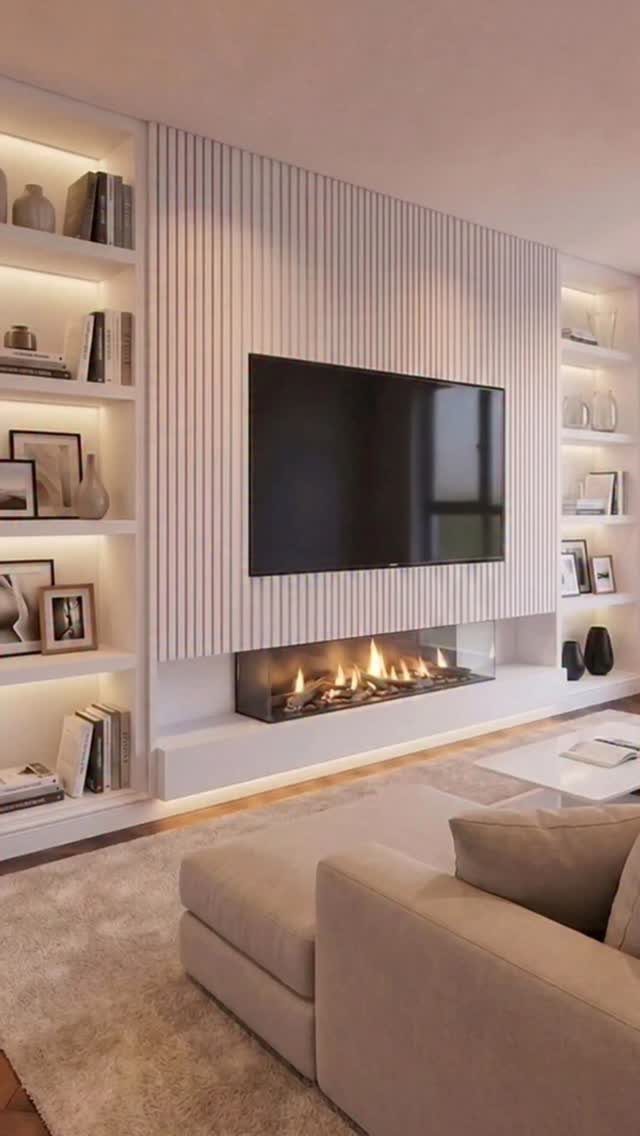
Bookshelves on both sides of the TV make a fireplace wall feel like furniture instead of a gadget stack. Open shelving also gives you a place for the router, speakers and anything else that would otherwise crowd the floor.
One tip from the maker: white matte acoustic panels helped cut echo and improve sound, which is worth borrowing since TV walls can sound hollow.
I would add warm white LED strips inside the shelves, because they light the wall without competing with the screen. Paint shelves and wall the same white so the TV recedes.
Fireplace TV walls are a stylish and functional way to create a focal point in any living space, combining the warmth of a fireplace with the convenience of a modern entertainment setup.
3. Linear Wall-Mount Combo
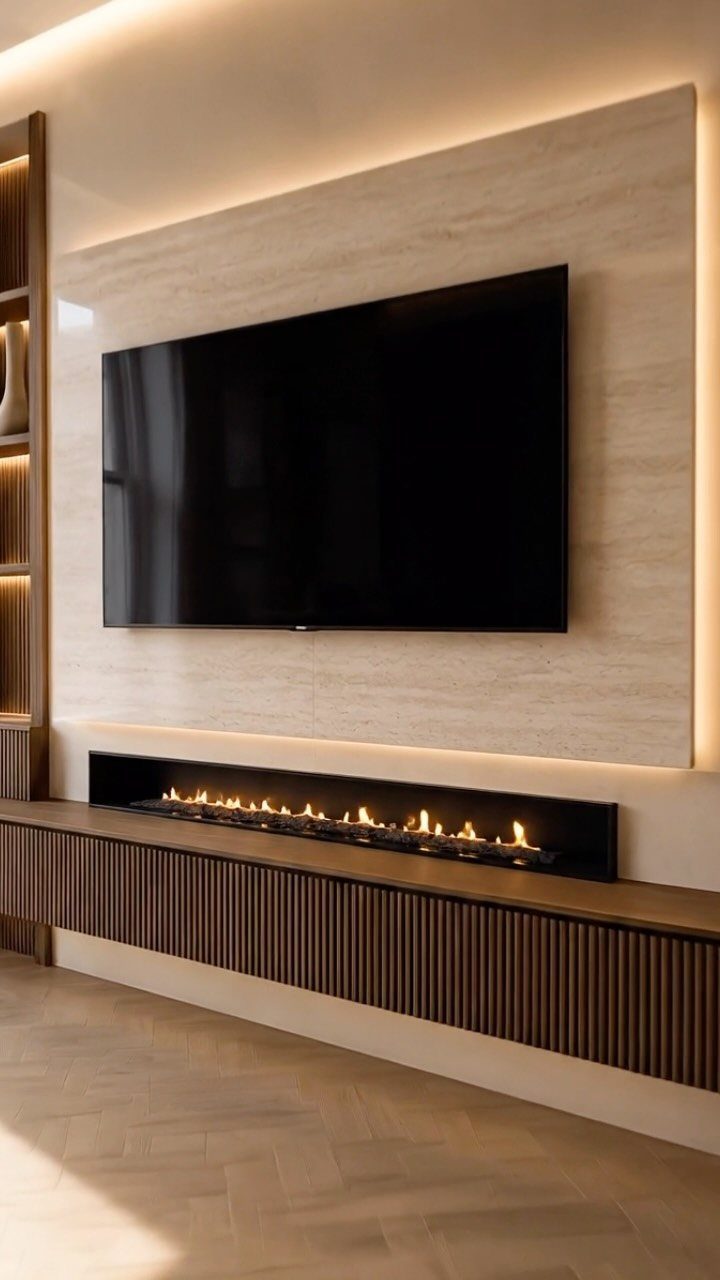
Long and low wins on this wall. A wide linear fireplace directly under a wall-mounted TV echoes the screen’s shape, so the pair reads as one planned unit rather than two things stacked.
I like this for living rooms that can’t spare floor space, since everything stays on the wall. Match the fireplace width to the TV width or go slightly wider; a narrow fireplace under a big screen looks like an afterthought.
4. Shiplap Accent Wall Design
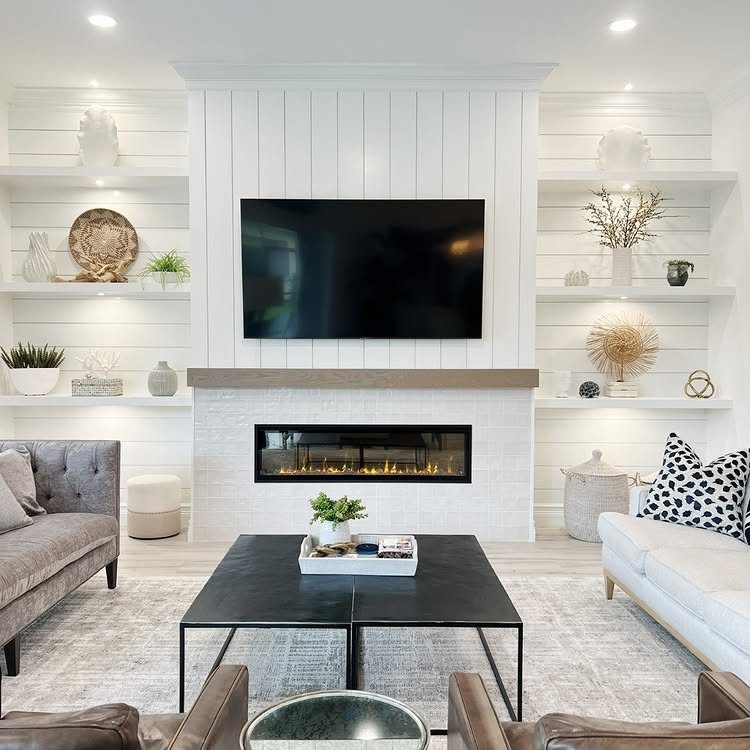
White shiplap does quiet work behind a TV. The horizontal lines add texture, and the single color keeps a dark screen from dominating the room.
It is also one of the friendliest materials for a weekend project: boards are easy to cut and nail up, and a coat of white paint finishes it.
Run the boards level and continue them behind the TV so the mount sits on a uniform surface. Built-in shelves on either side frame the wall nicely, though they add cost and time.
5. Stone Surround Feature
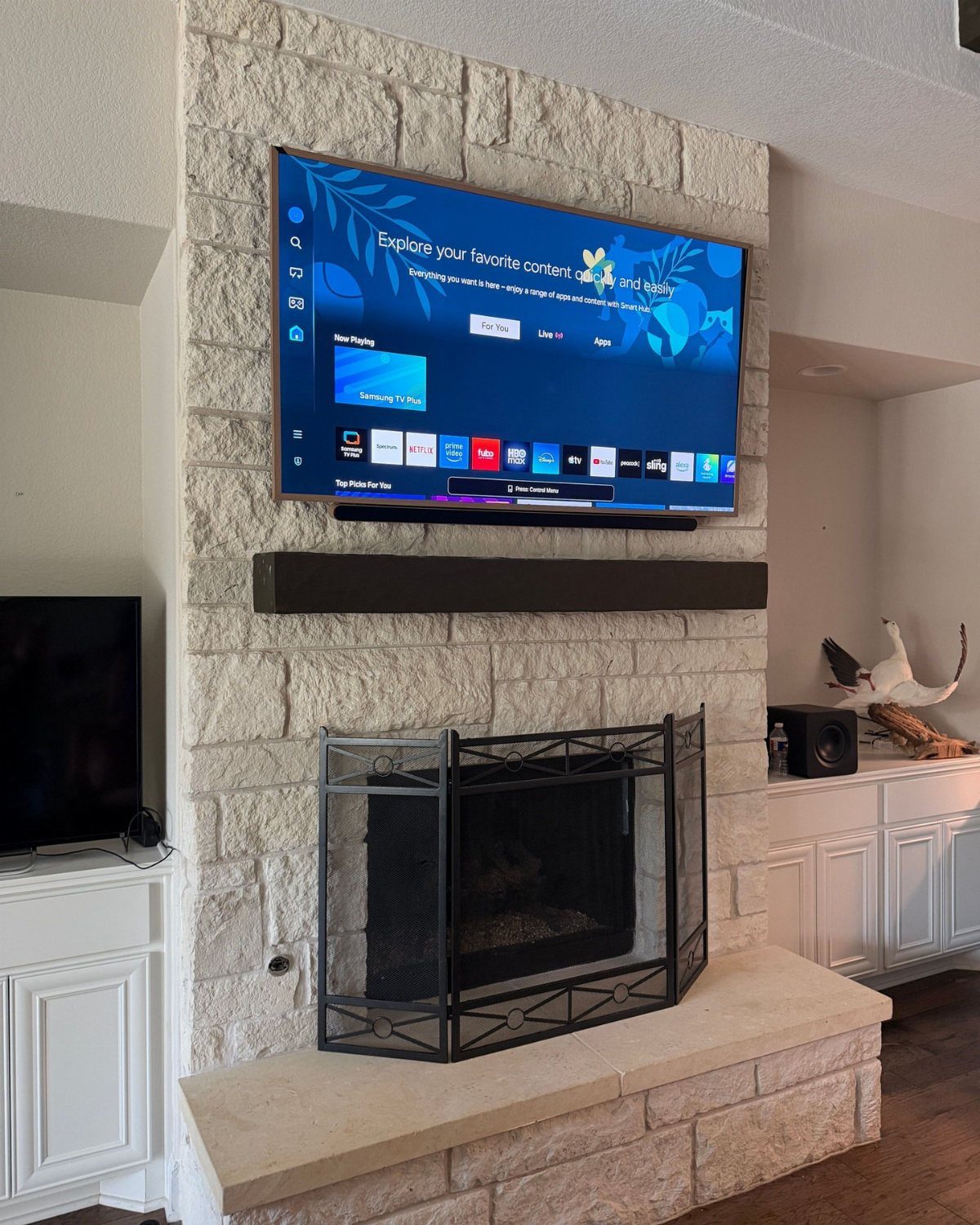
Pale stone beside a dark wood mantel gives a fireplace real weight, and the TV above it sits inside that frame instead of floating on blank wall. The contrast does the decorating for you.
I would keep the mantel dark and the stone light so the screen’s black rectangle feels part of the palette. Stone is the priciest and most labor-heavy option here, so it will be a bigger job than a weekend.
6. Floor-to-Ceiling Tile Wall
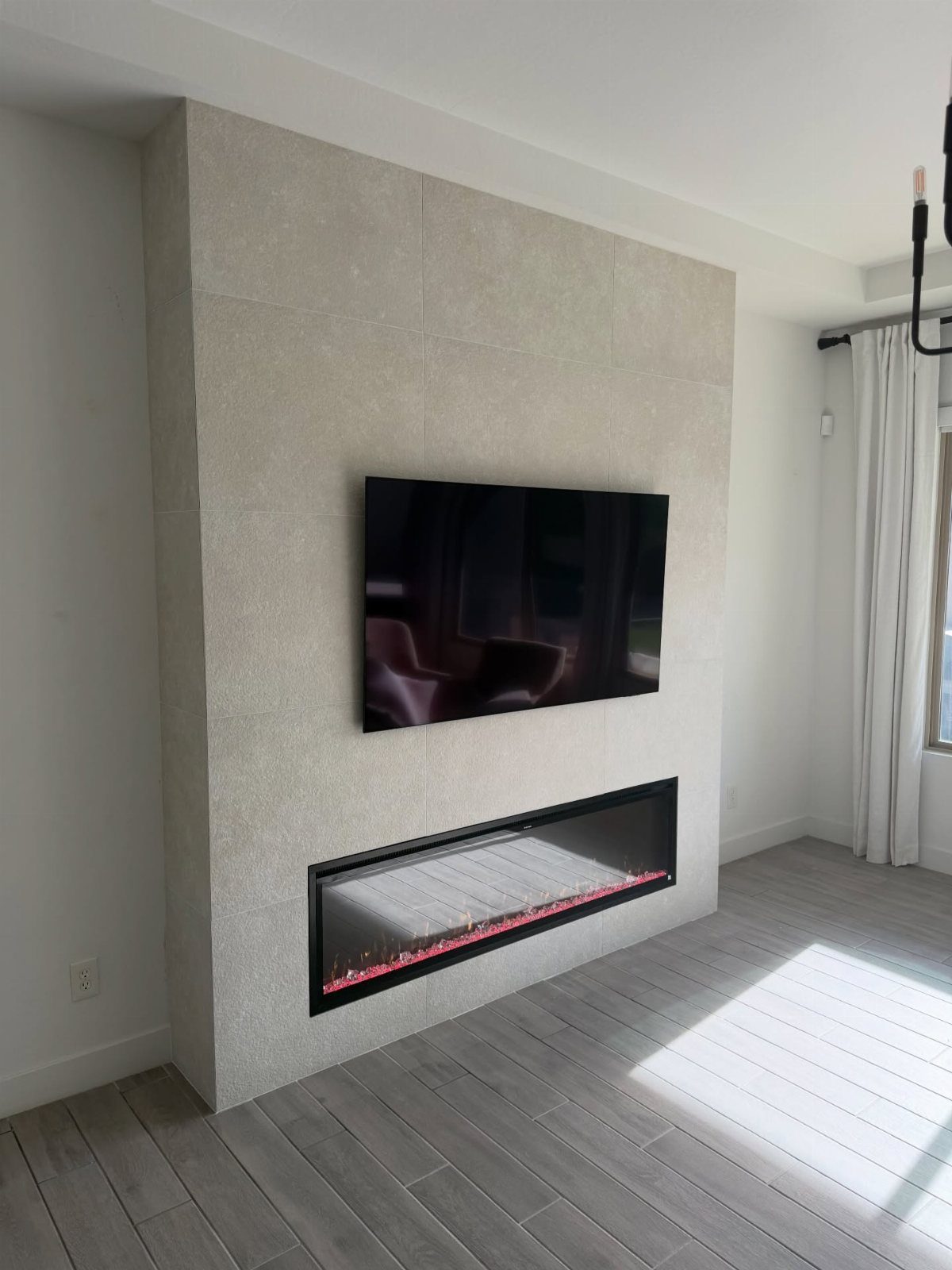
Tile from floor to ceiling turns the whole wall into the feature, which means the TV and fireplace stop competing with the surrounding room. A soft beige keeps it calm, and large tiles mean fewer grout lines to look at.
Wood-look flooring and white curtains keep the tone warm so the tile does not feel cold. Plan the TV mount and wiring before tiling, since drilling into finished tile later is a risk you can avoid.
7. Floating Mantel Shelf
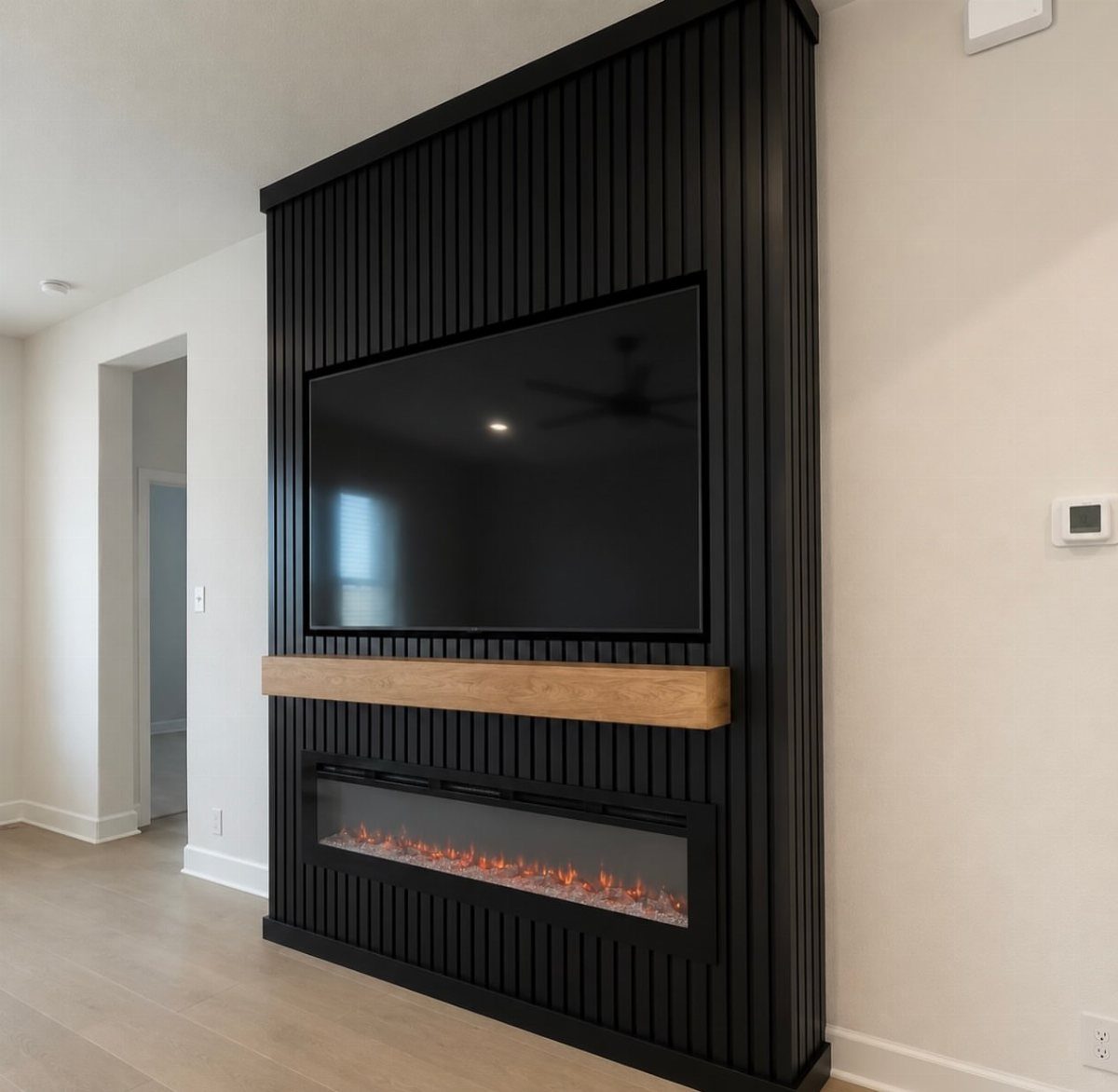
A floating mantel shelf gives the eye a place to rest between the flames and the screen. Without that break, the fireplace and TV blur into one tall stack of glowing rectangles.
Light wood on dark slatted wall gives the shelf a clean, deliberate line.
I would keep it fairly slim and use it for one or two low objects, since anything tall crowds the bottom edge of the TV. Mount the shelf into studs before you hang anything on it.
8. Farmhouse Stone Fireplace
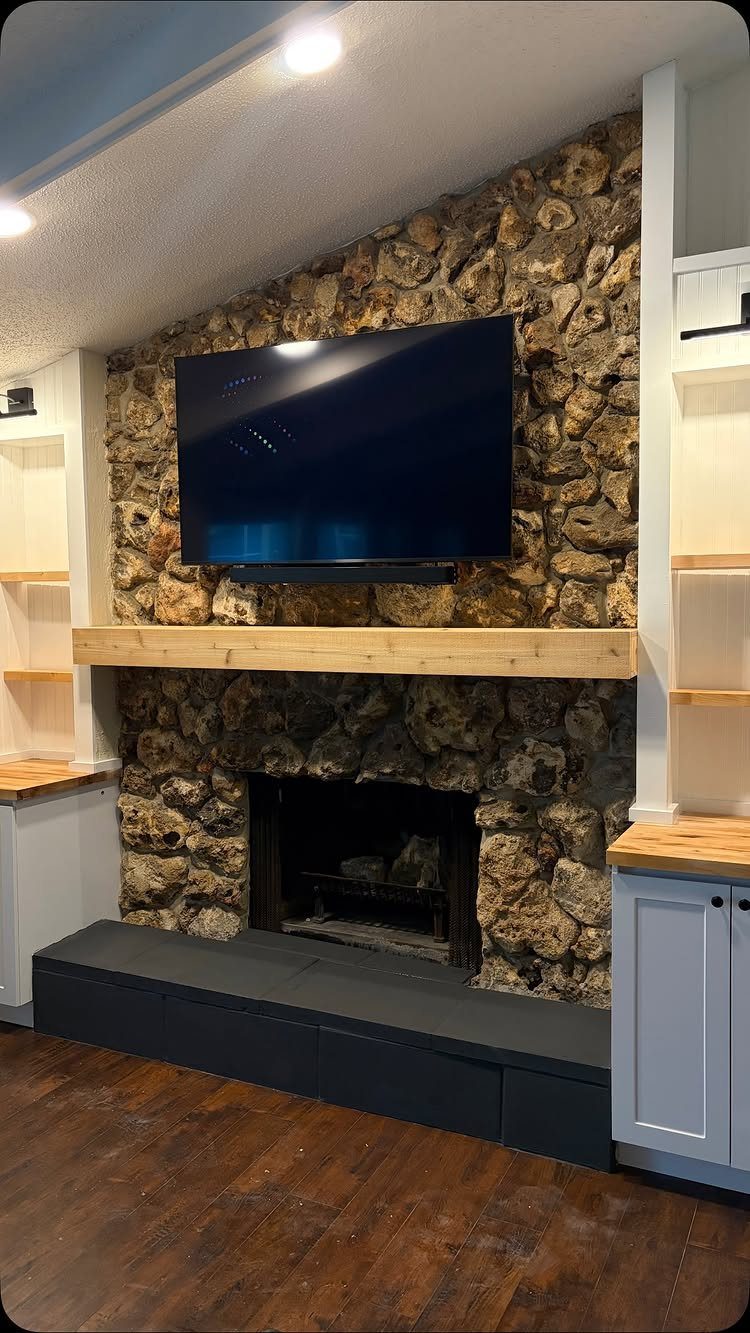
Rough stone and a thick wooden mantel make a TV feel less like a gadget and more like part of an old room. The texture does the warming, so the screen stops being the coldest thing in view.
White built-in shelving on both sides keeps the stone from feeling heavy, and dark floors ground it.
I’d go simple on the shelving and minimal on the mantel, since stone gives you pattern already. Real stone is a big job; a stone veneer is the lighter route.
9. Modern Linear Fireplace
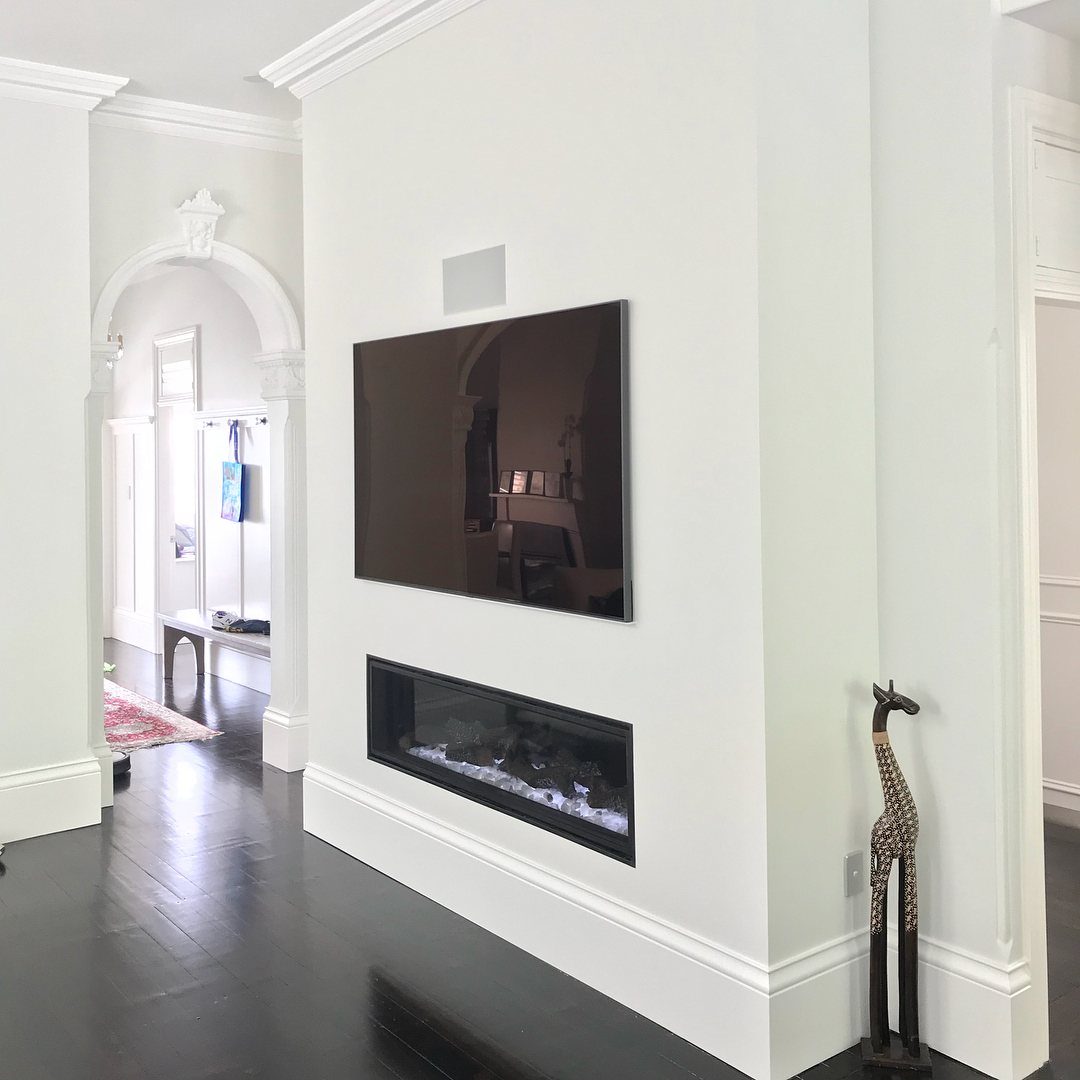
On a plain white wall, a long, narrow linear fireplace with a TV centered above is about as tidy as this setup gets. No mantel, no frame, just 2 clean shapes and a lot of calm space around them.
That simplicity asks for discipline.
I’d center the TV on the fireplace and leave the wall bare, since white shows every bit of clutter. Hide cables inside the wall if you can.
10. Electric Fireplace with TV Above
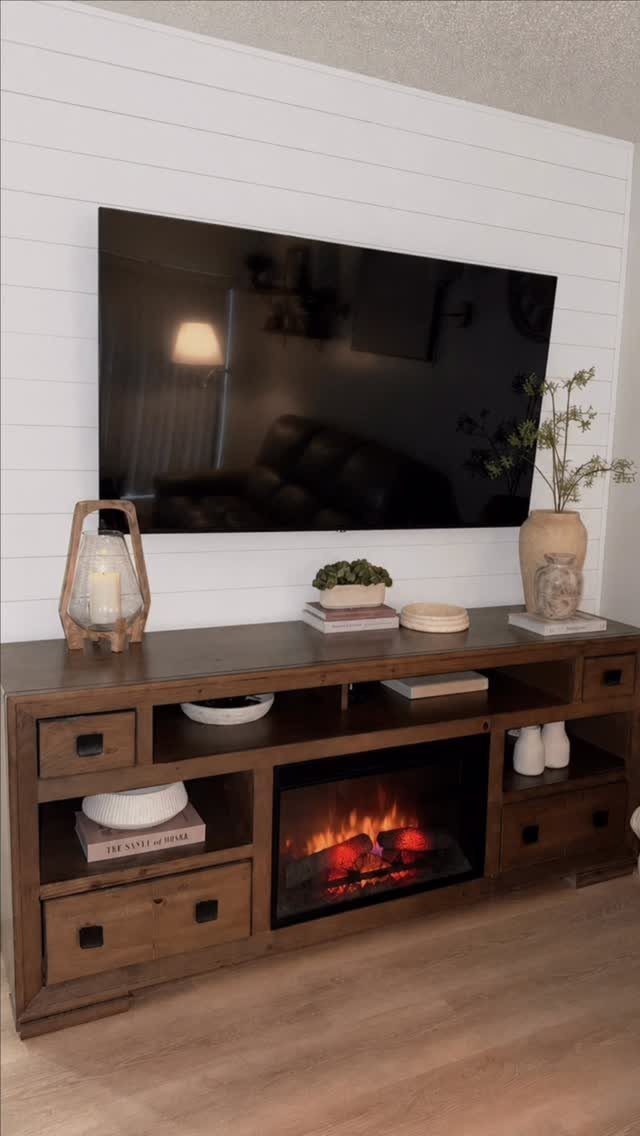
An electric fireplace built into a wooden media console is the easiest version of this idea to live with.
The console holds the fire, the cable box and the game system in one piece of furniture, so there is no wall to open up.
Here it sits under a white shiplap wall, which gives the TV a clean backdrop.
I would mount the screen on the wall rather than the console, so the whole thing stays slim. Plug it in, hang the TV, done.
11. Wood Slat Accent Wall
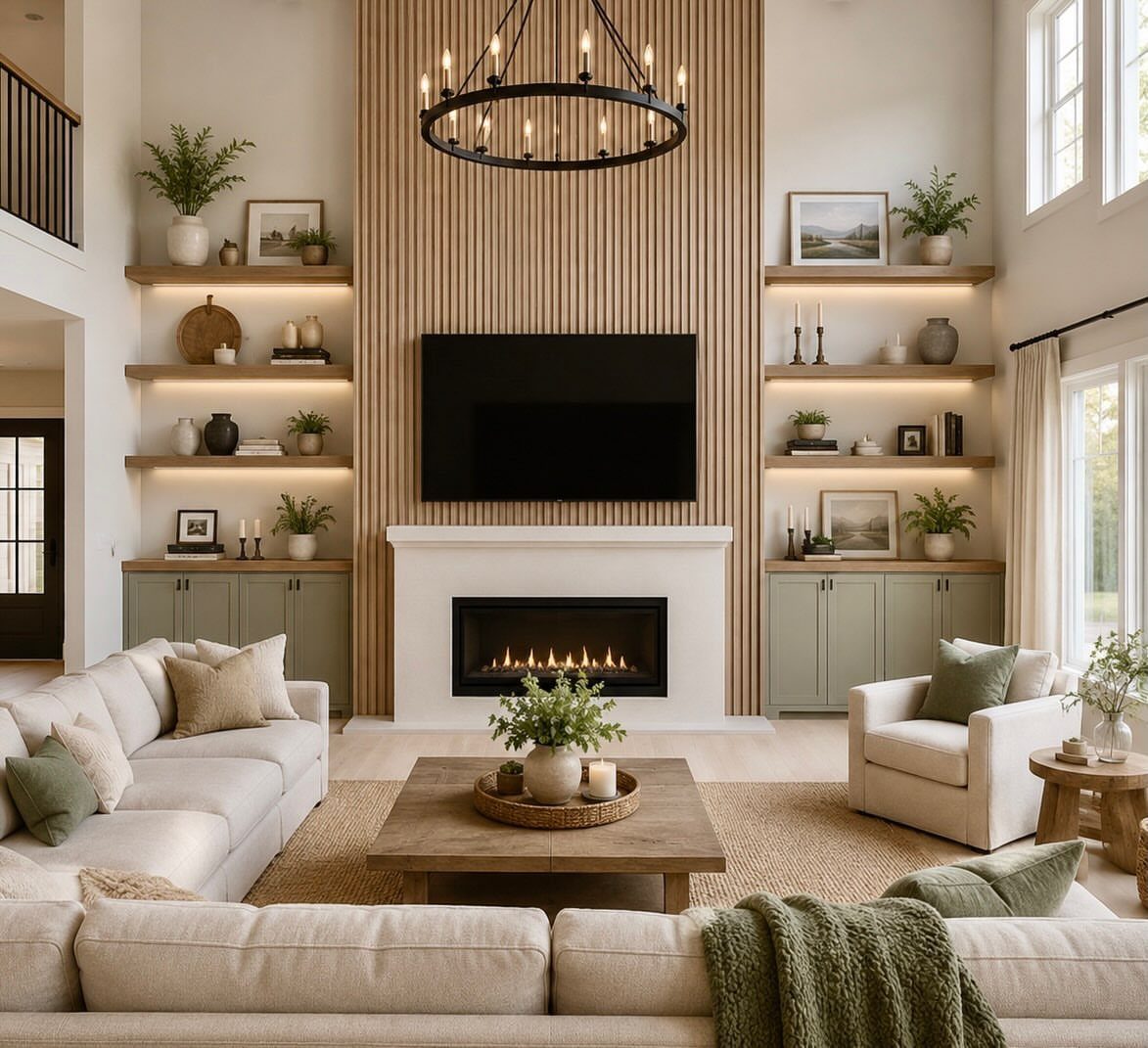
Vertical light wood slats make a white fireplace look taller, and the TV mounted above them sits on a warm, textured surface instead of bare paint. Built-in storage on either side finishes the wall.
I like the contrast of white fireplace against wood: it keeps the slats from feeling too heavy.
Run the slats floor to ceiling and mount the TV through them into the studs behind. Slats and built-ins together add up to a larger project, so budget time and money for both.
Designing a Fireplace Wall with TV
Heat comes first. An electric fireplace sends very little heat upward, so it is the safest pairing with a screen above it.
Check the fireplace manual and the TV manual for minimum clearances before drilling anything, and plan on a deep mantel or a heat deflector between the firebox and the screen, whether the fire burns gas or wood.
Mounting height is the second check. A mount that tilts down or pulls out and lowers the screen takes strain off your neck, which matters if you watch a full movie at a time.
Visual balance comes last.
Why Place a TV Above a Fireplace?
Most people who hang a TV above a fireplace do it for practical reasons.
In a compact living room, the fireplace wall may be the only one with space for a screen, and it tends to sit close to the outlets and cable lines already in place.
Looks matter too.
Look at the downsides too, and do it before any holes go in the wall.
Heat and smoke can harm a TV, and running cables behind a fireplace wall is harder than on a plain one. An electric unit avoids the worst of both.
Challenges of TV Placement Above Fireplace
Heat is the biggest risk. A fireplace that runs all day through the winter can damage a TV above it, and smoke from a wood fire can do harm as well.
Check the clearance guidelines for your fireplace before you drill, and treat them as a limit, not a suggestion.
Viewing height is the other problem. A screen mounted high above the firebox pulls your eyes up, and after a full movie your neck will notice.
Cabling is the third headache. Plan how power and HDMI will reach the screen before the wall is finished, because fixing it afterward costs far more time than doing it first.





