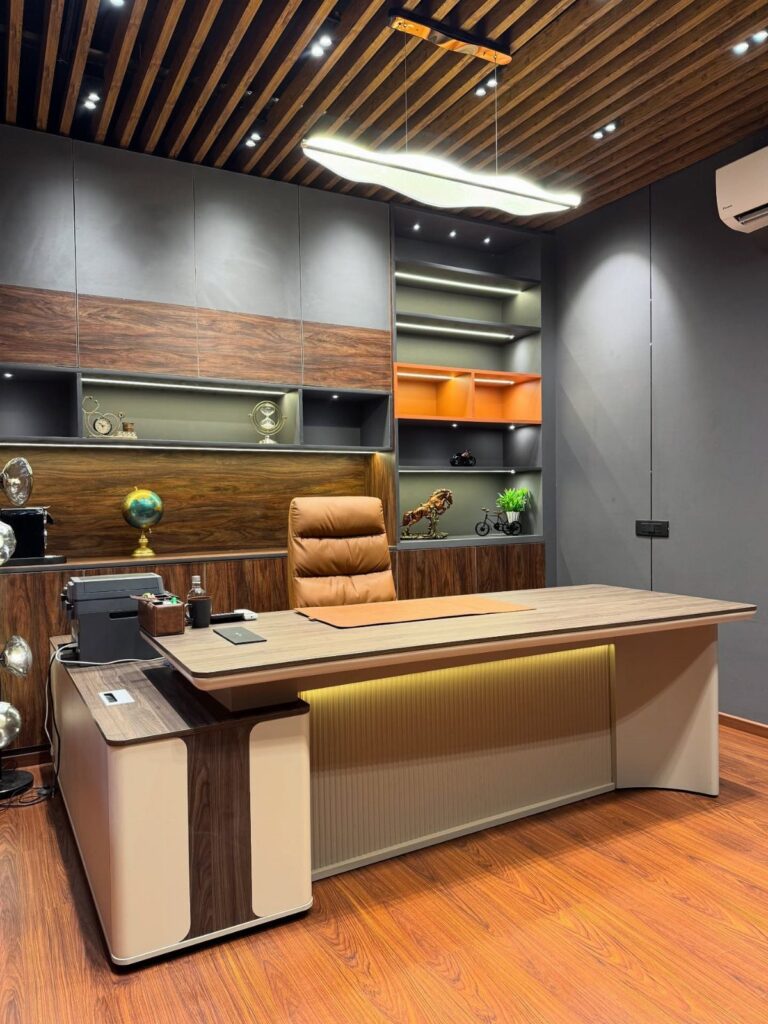
Whether you rent or own decides most of this list: a rental rules out built-in cabinetry, so you work with furniture, lighting, and plants instead, while an owner can add vertical storage and change the wall color once the layout is settled.
The ideas run from a single desk plant to black furniture and exposed brick, and the cheapest ones are mostly paint, thrifted vintage pieces, and different lamps.
1. Solid Desk and Ergonomic Chair
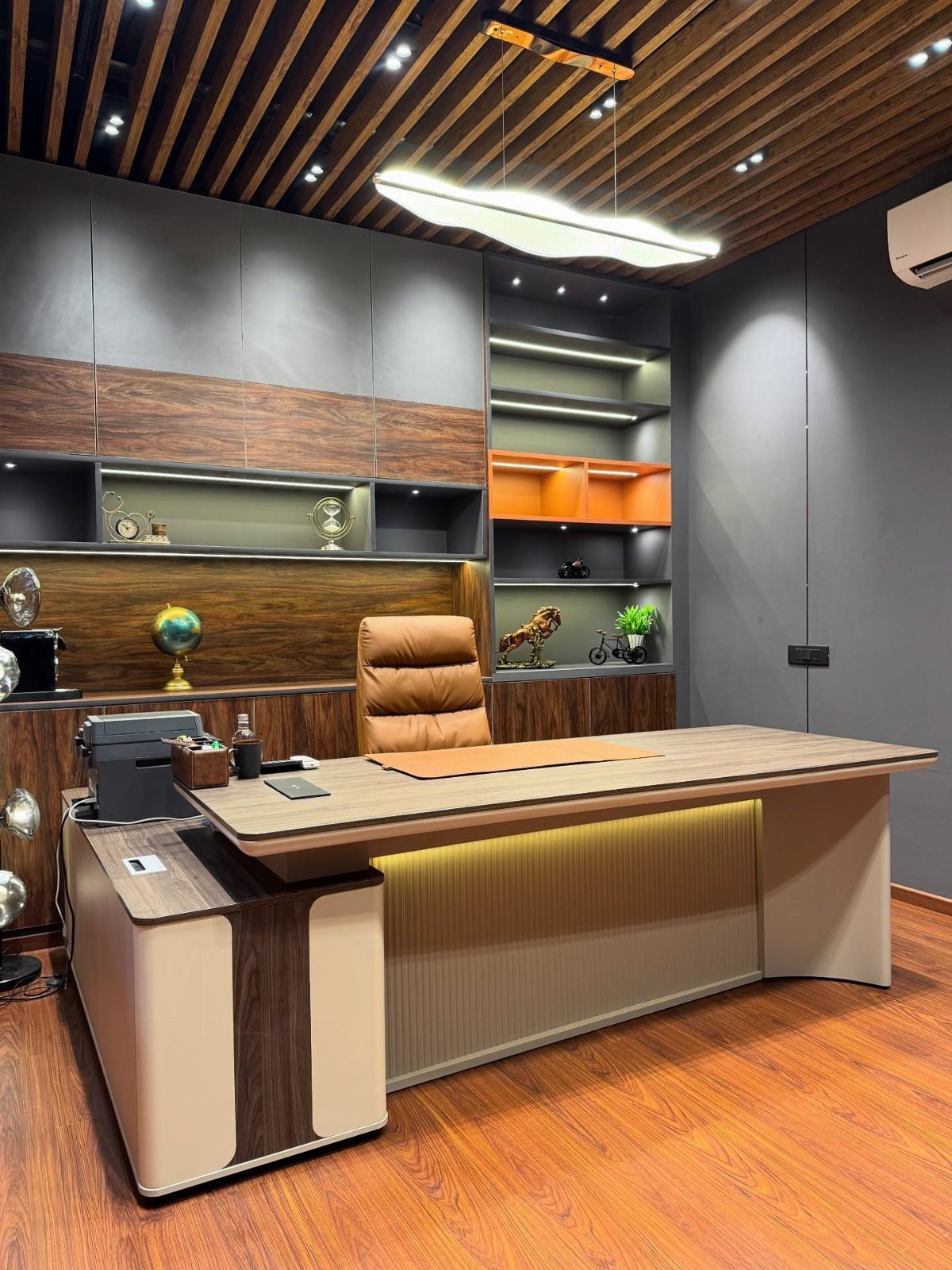
A wide wooden desk and a leather chair with real adjustability make a pairing I would spend on first. You sit at them for hours, so they carry more weight than any decor.
Pick a desk deep enough that a monitor sits at arm’s length, and a chair with adjustable height and a tilt you can lock. Wood and brown leather also age well together, so scuffs read as character.
If the budget only covers one, buy the chair first.
2. Built-In Cabinetry
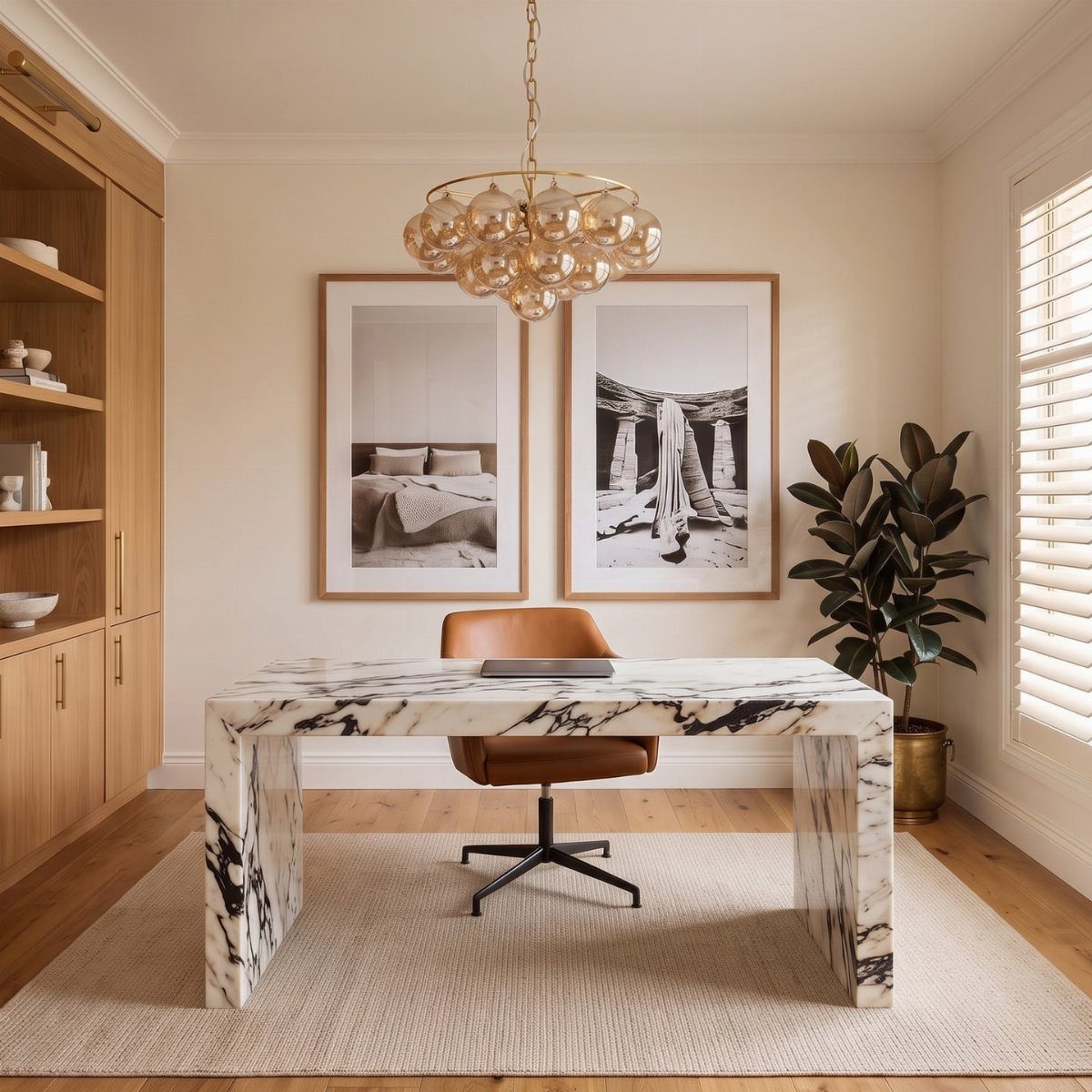
Cabinetry built into one wall turns a spare room into a finished office. Light wood keeps the run from feeling heavy, and it pairs easily with a marble-topped desk.
Full custom work runs expensive, so I would price stock cabinets with trim added to look built in.
Put closed doors below to hide printer paper and cables, and keep any open shelving above for a few books and a plant.
Leave the other walls fairly bare so the cabinets stay the focus.
3. Create Vertical Space
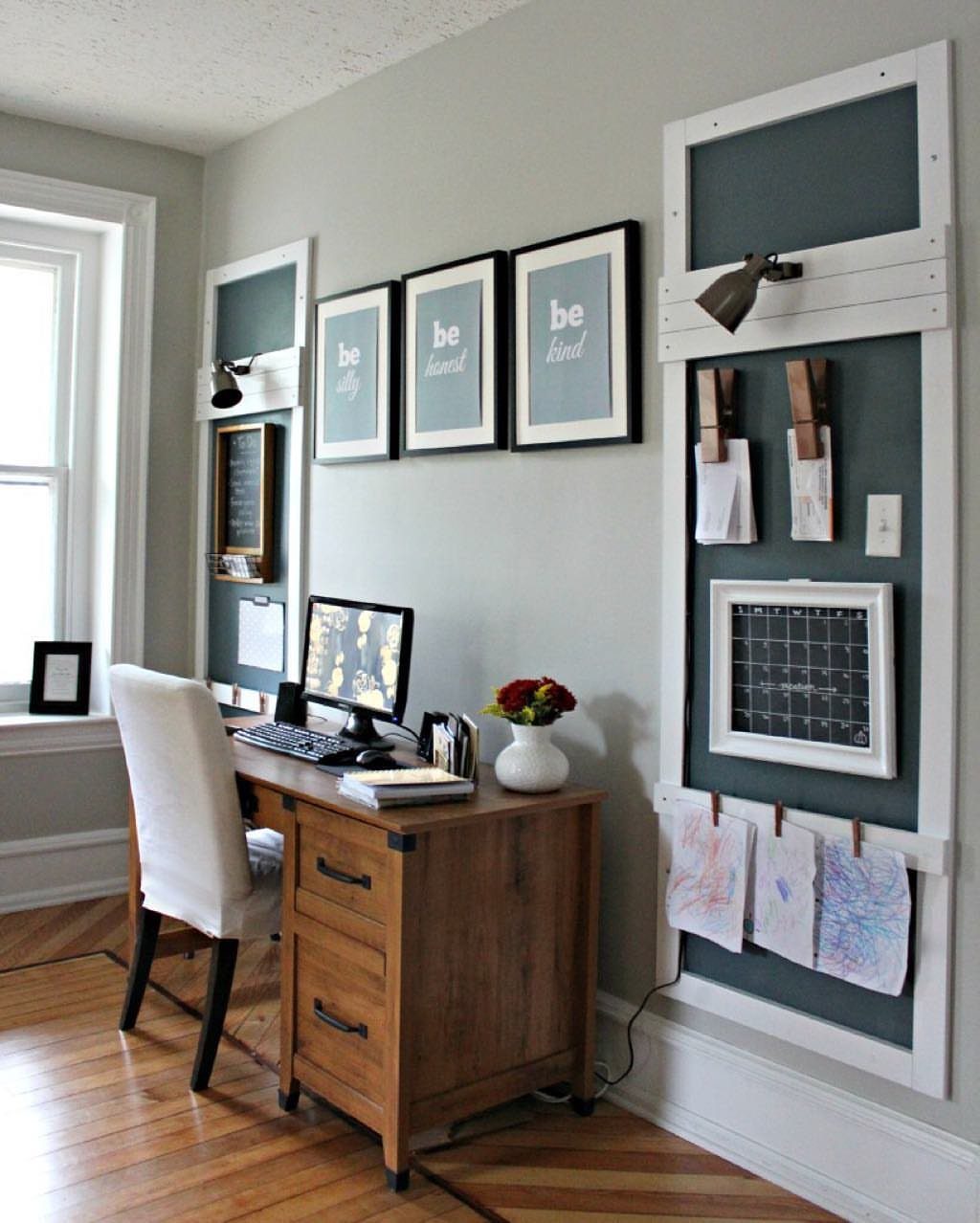
Wall-mounted organizers free the desktop, which matters most when floor space is tight. Mount them above the work surface so pens, folders, and notepads stay within reach but off the desk.
I like pairing the organizers with a row of framed prints at the same height, so storage and decor read as one arrangement. Keep the frames matching in size.
Mark the layout with painter’s tape on the wall first, then drill once you like the spacing.
4. Navy, Charcoal, and Forest Green Colors
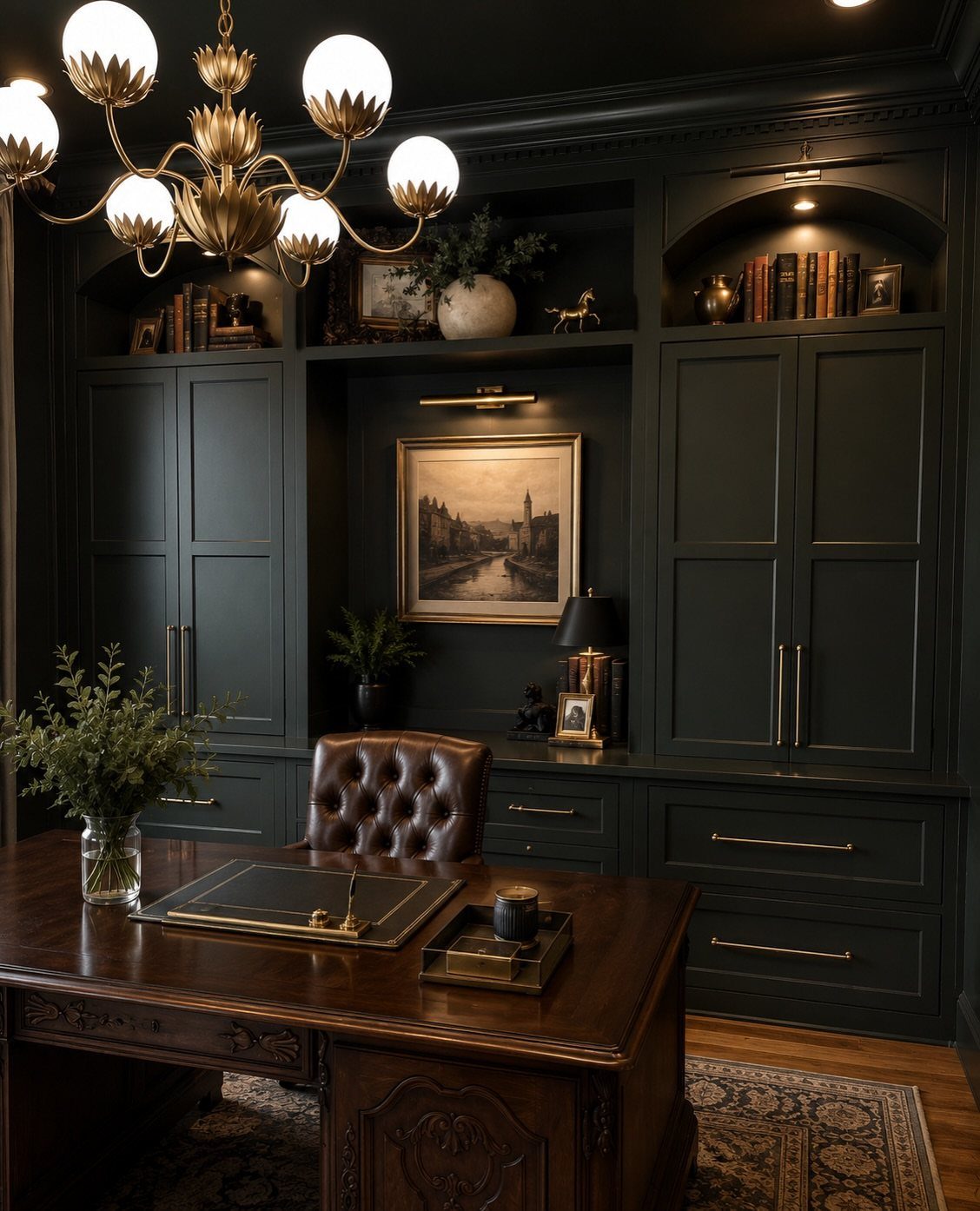
Dark forest green on built-in shelving gives an office a library feel, and a wooden desk with a leather chair sits well against it. Navy and charcoal work the same way if green feels too bold.
Paint cabinetry and walls in the same shade so the color wraps the room. Matte or eggshell finishes hide glare from a screen better than gloss.
Test a sample patch first and check it at night under your actual lamp, because deep colors shift a lot.
5. Industrial-Style Fixtures
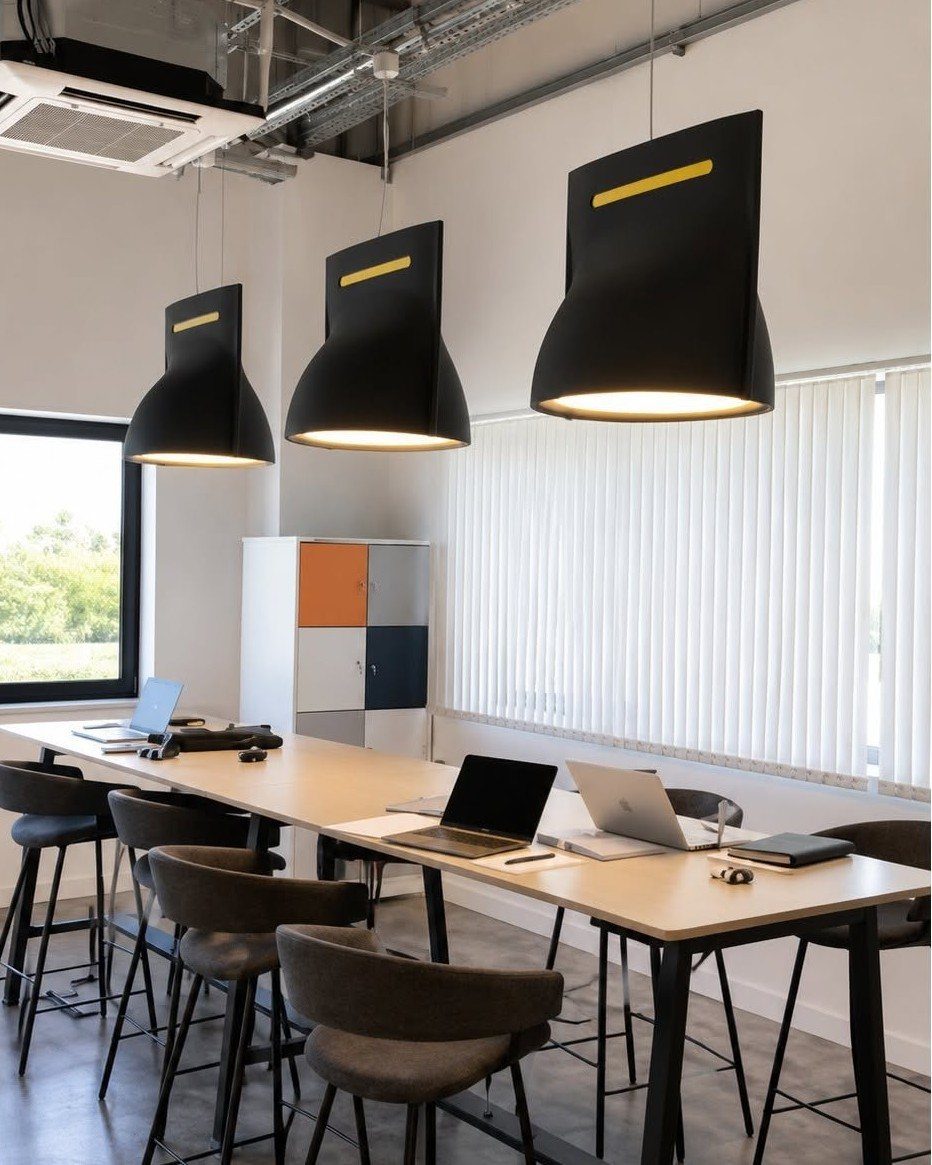
Oversized black pendants over a long desk set the tone. Hang them in a row, evenly spaced, so the light falls across the full work surface rather than one spot.
Black metal shades look best against a pale ceiling and a warm wood top. Keep them modest in number: a few large fixtures say more than a crowd of small ones.
If hardwiring is out of reach in a rental, plug-in pendant kits with a cord and a ceiling hook are the workable substitute.
6. Desk Plants
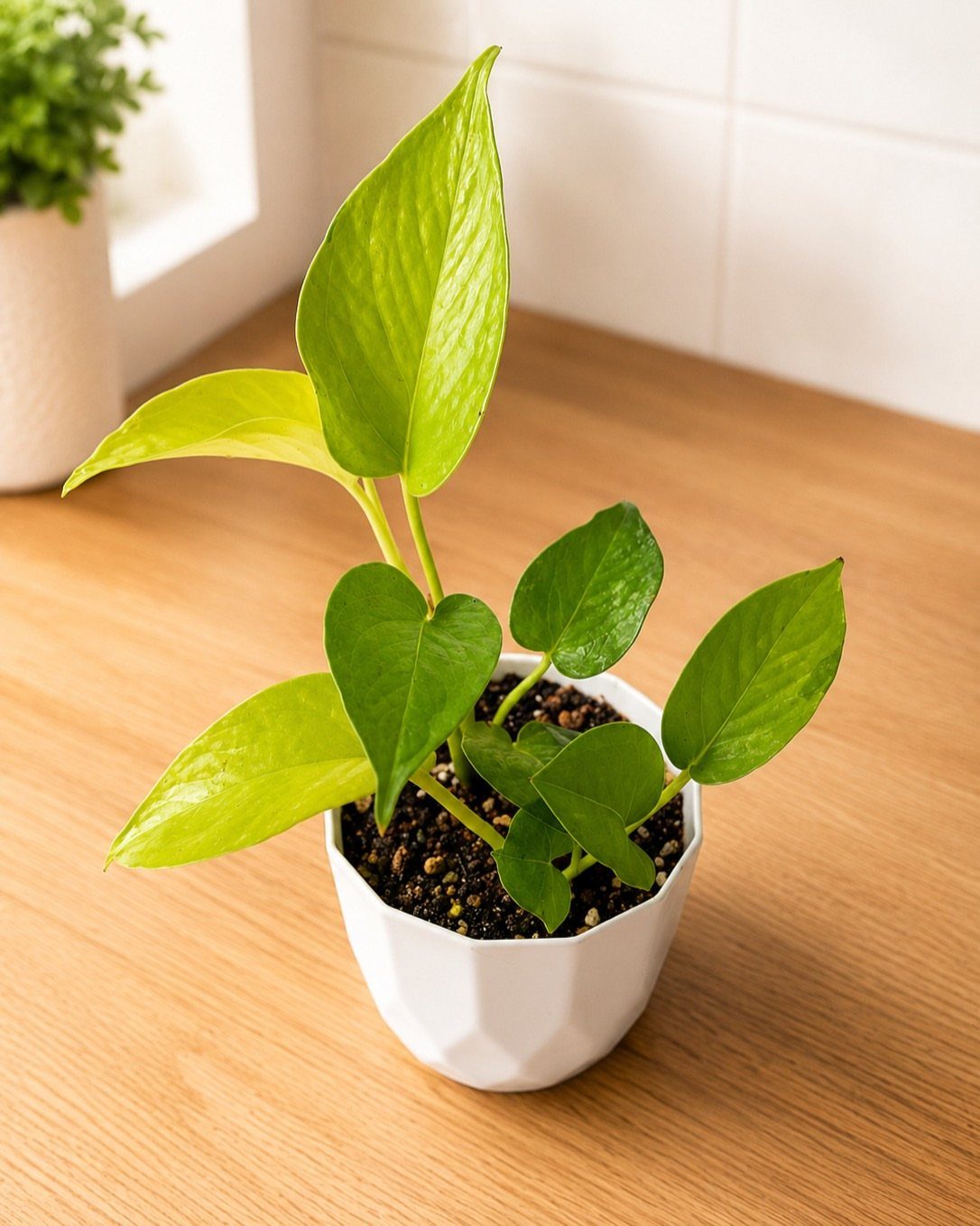
A single small plant in a white geometric pot does a lot on a desk without eating workspace. Choose something compact, since a trailing or bushy plant ends up fighting your keyboard.
White pots keep the green sharp against a wood surface, and the angular shape suits a masculine room better than a soft round planter.
Set it at the corner of the desk, away from where your arms rest, and use a saucer so water never touches the wood.
7. Lamps and Soft Bulbs
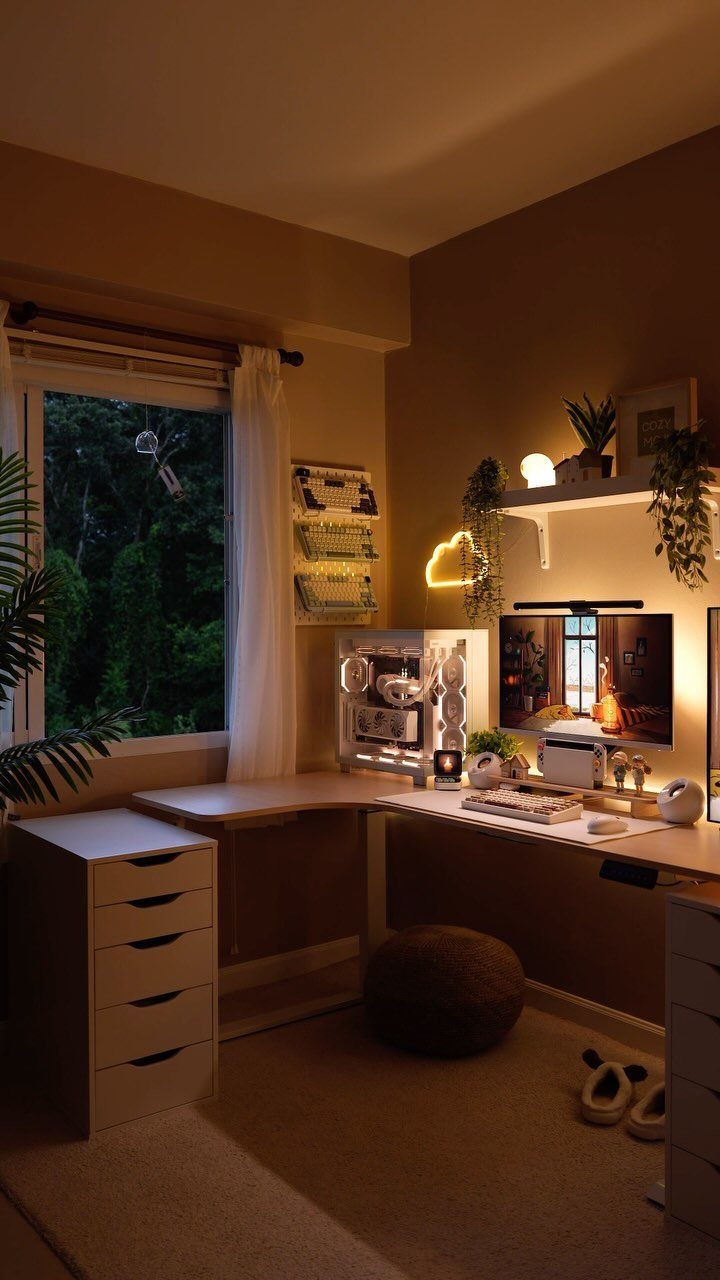
A cloud lamp, a desk lamp, and a neon accent each light a different layer of the room, and that layering is what makes a desk feel cozy at night.
Use warm soft bulbs in every fixture so the colors match instead of fighting each other.
Put the desk lamp off to the side, away from your monitor, so it doesn’t throw glare on the screen. Keep the neon as an accent rather than your main light.
I would pick one lamp you actually enjoy looking at and build around it.
8. Minimalist Desk Setup
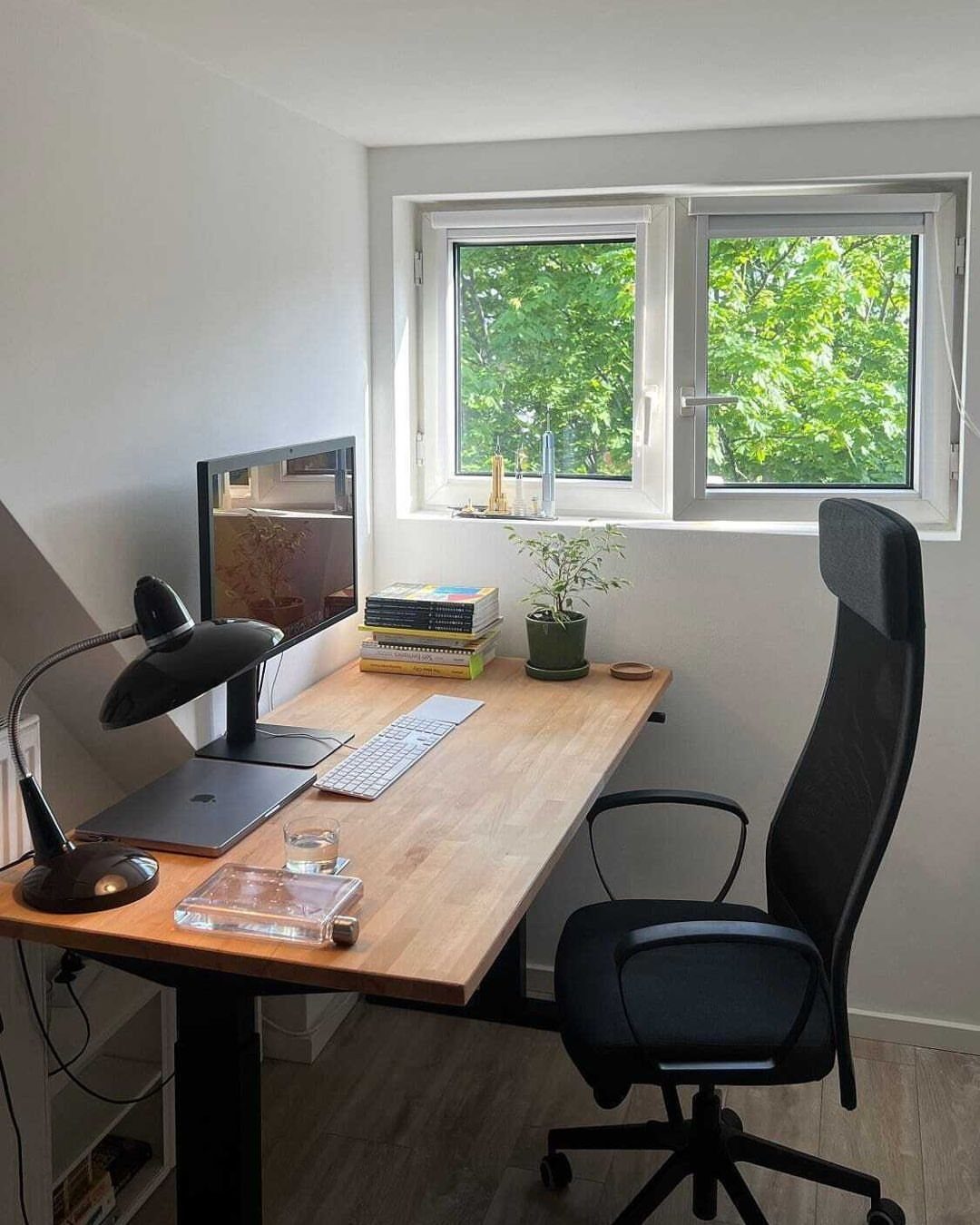
A light wood desk that holds only what you use that session stays clear enough that sitting down to work takes no friction. Everything else gets a home somewhere off the surface.
Choose a plain black chair that tucks fully under the desk, so the whole setup stays visually quiet. A single plant is plenty of decor.
Clear the desk at the end of each day, and the habit does more for focus than any gadget I know of.
9. Minimalist Artwork
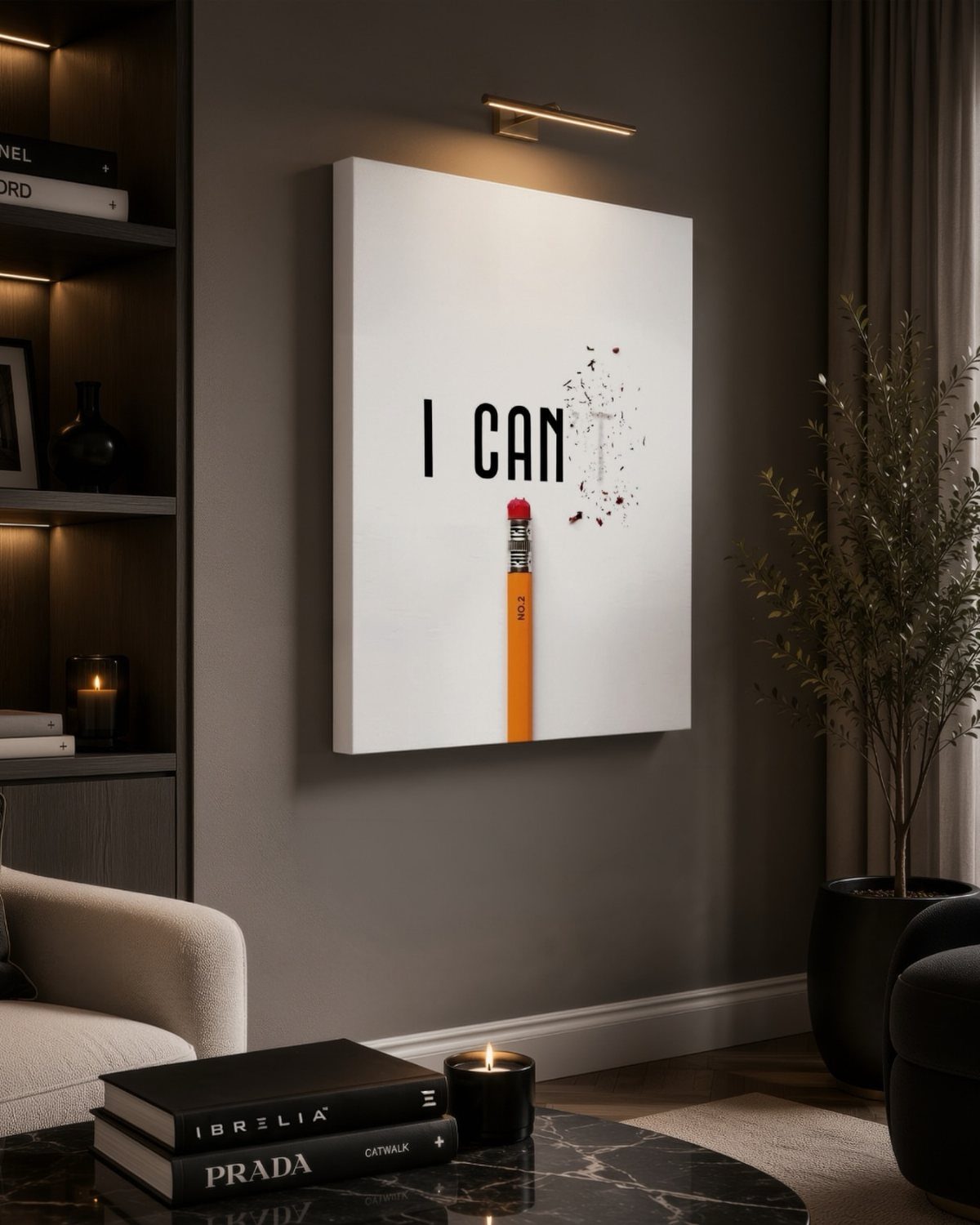
One white canvas with a short phrase and a simple pencil drawing carries a grey wall by itself. A single piece with room around it beats a crowded gallery in a small office.
A slim picture light above the canvas makes it read as deliberate, and a table below with a few books and a candle anchors it. Hang the canvas so its center sits near eye level when you stand.
I would choose words that push you to work, not a joke you’ll tire of.
10. Vintage Furniture
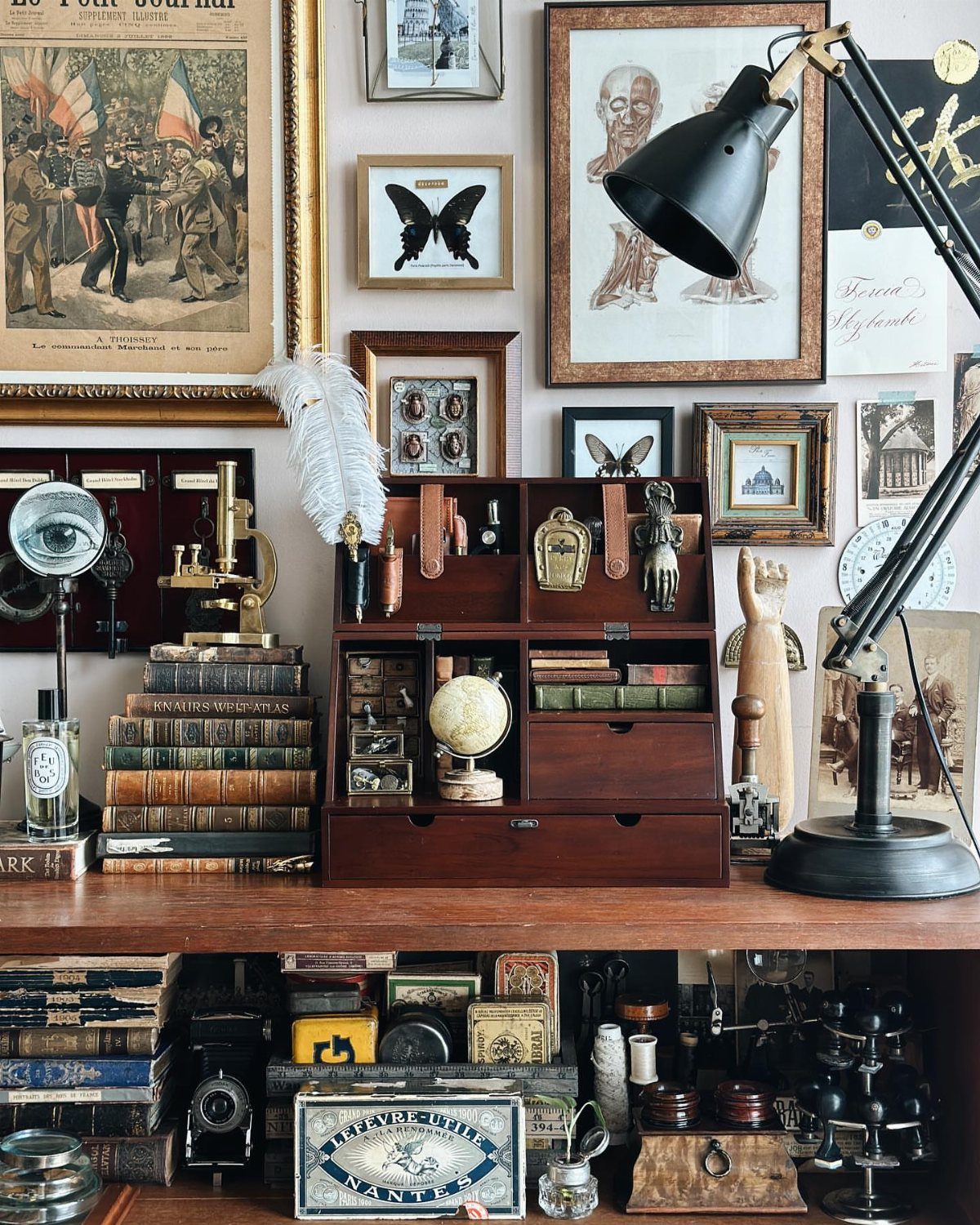
Old things bring a desk character that new furniture can’t fake: a vintage organizer, a globe, and aged books on a wooden desk do the job. Look for pieces with real wear and lettering, like a stamped metal box.
Thrift shops and flea markets are the cheapest places I would start, and a weekend of browsing can fill a whole desktop.
Stick to one wood tone and a few decor pieces so the desk looks collected rather than cluttered.
11. Exposed Brick, Metal, and Wood
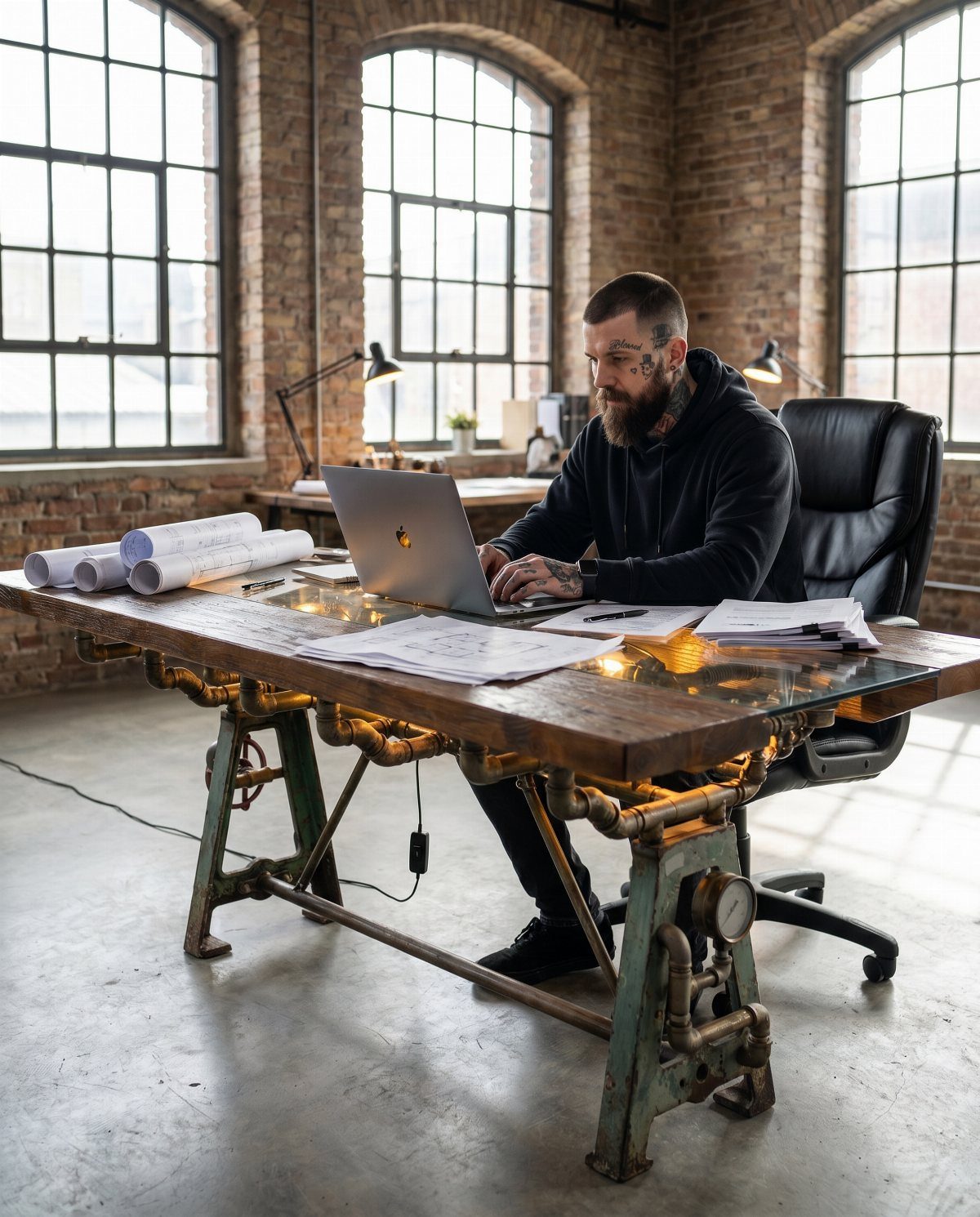
Brick, metal, and wood work together because each has a different texture: rough masonry, cool steel, and warm grain. A wooden desktop on metal pipe legs fits that mix well.
Large windows keep exposed brick from feeling dark, so set the desk where the daylight lands. In a rental, painting or altering brick usually isn’t allowed, so choose a desk that brings the metal and wood to you.
I’d pick a thick wood top over a thin one; it holds its own against the brick.
12. Black Furniture
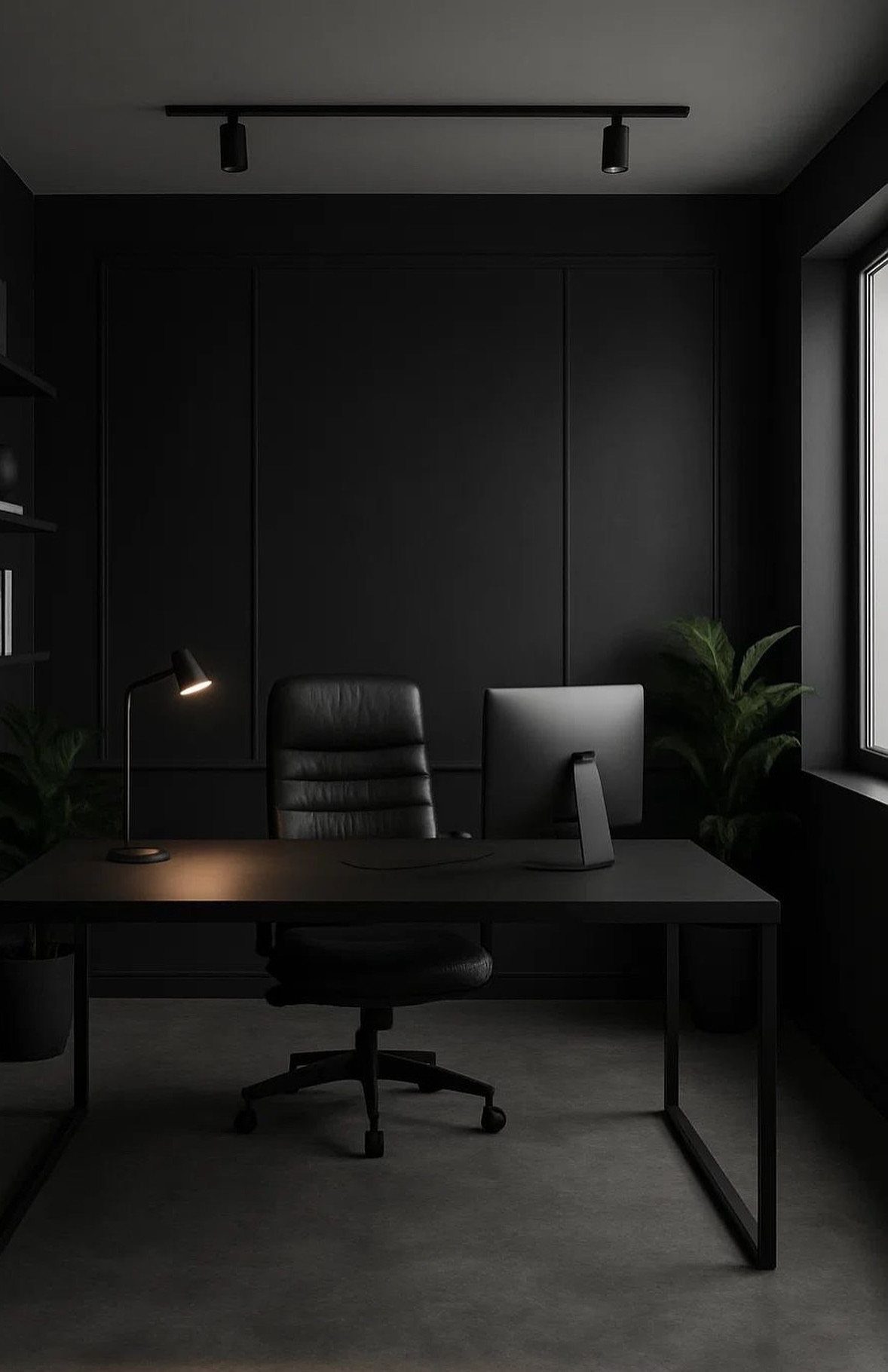
Black walls, a black desk, and a black leather chair make an office feel like a private den. Paneled walls add depth, so the space looks moody instead of flat.
Break up the darkness with a desk lamp and a green plant, because all-black needs a few points of light and color. Matte finishes look richer than glossy ones.
I would start with the desk and chair, then paint the walls only once you know you like the mood. Paint is the easiest piece to add later.
13. Coffee Station
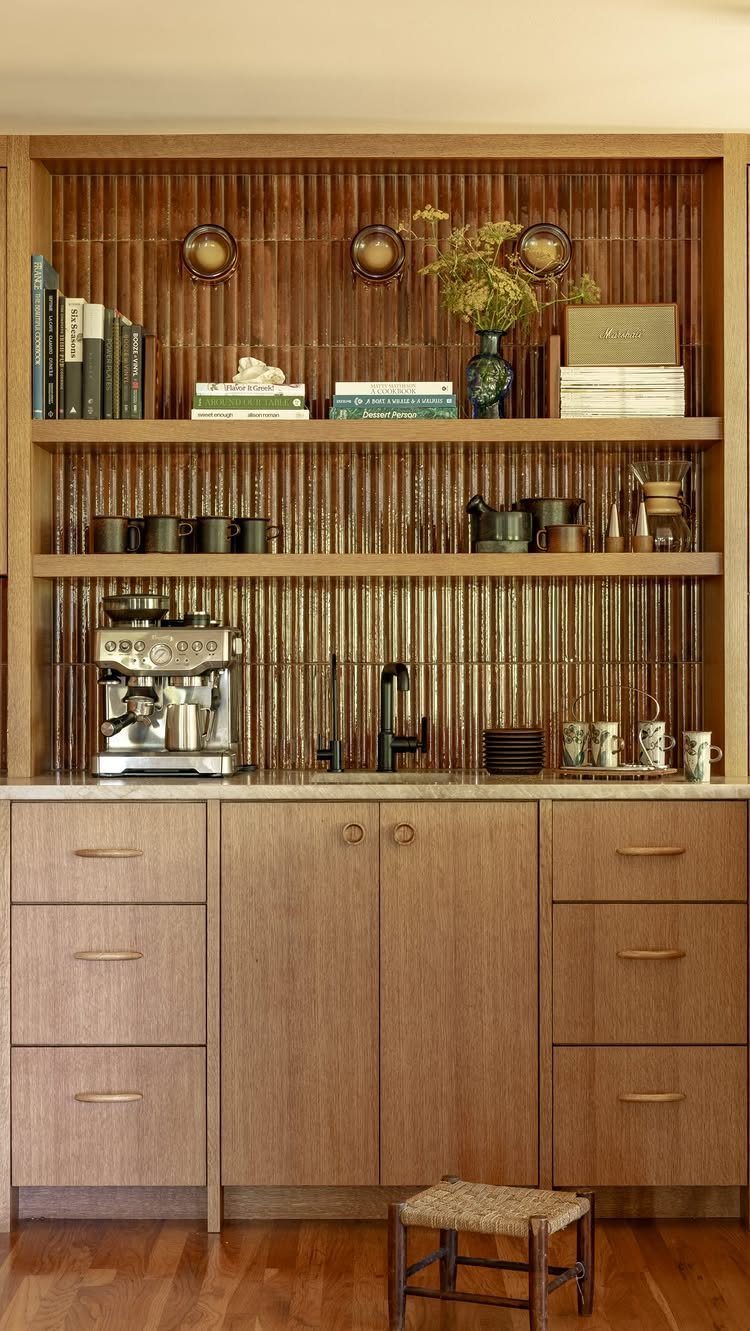
A coffee nook built into the office wall saves the walk to the kitchen, and it keeps you at your desk through a long morning.
Lower cabinets hold beans, filters, and spare mugs out of sight, while open shelves above show off the mugs you actually use.
Leave a clear stretch of counter around the espresso machine so there’s room to work. Put the nook on the wall farthest from your monitor, so steam and noise stay away from your keyboard.
A small stool tucked beside it gives you a place to wait for the shot.
14. Modern Rustic Fusion
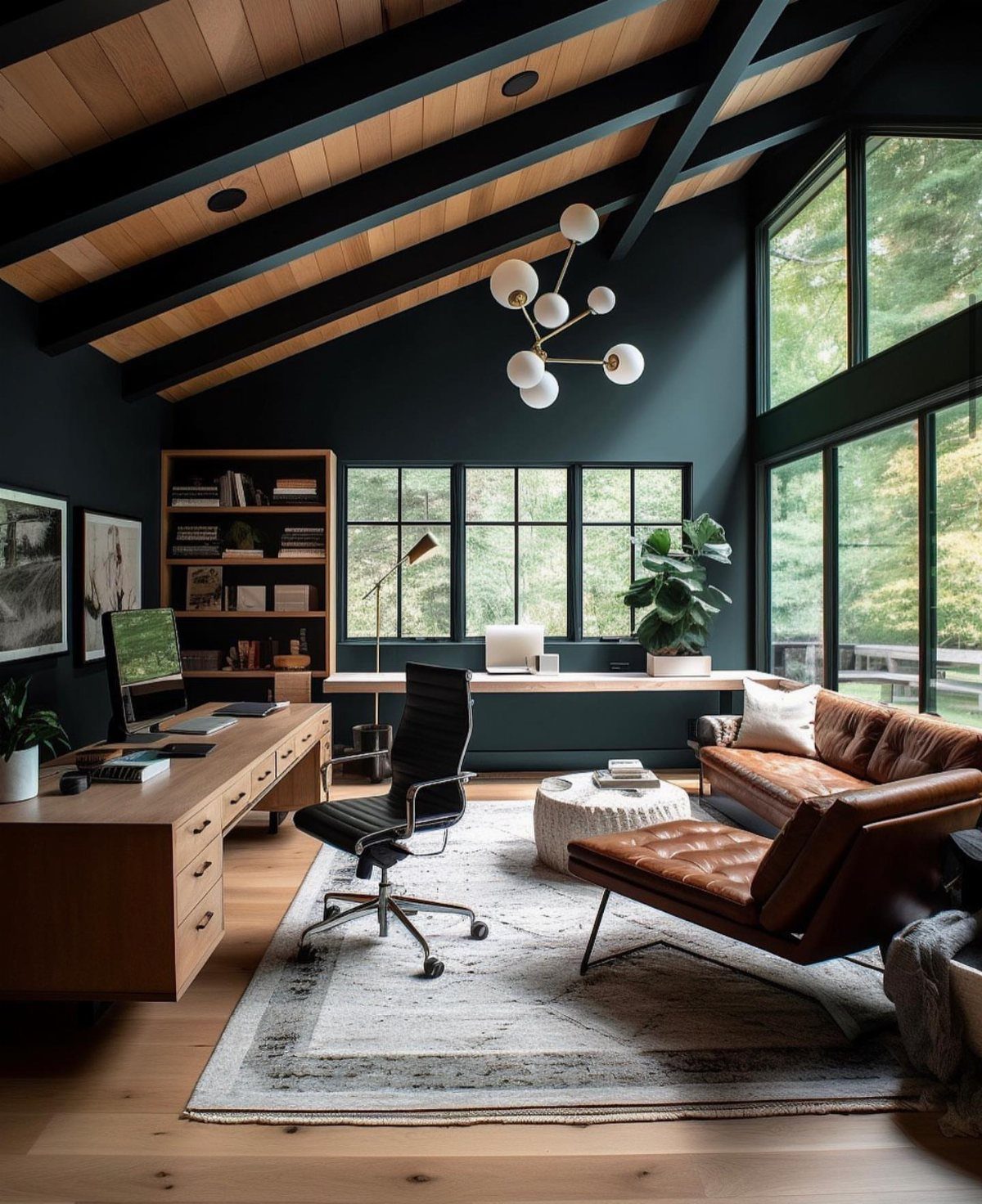
Dark green paint paired with exposed wood overhead puts modern color against rustic texture without forcing either one to dominate.
Pick one side to lead.
Here the wood does the heavy lifting, so everything else stays simple. A wood desk, leather seating, and one fixture are all you need to make the combination read clearly.
Without a vaulted ceiling, I would paint the walls dark and let the desk carry the wood.
15. Lodge-Inspired Workspace
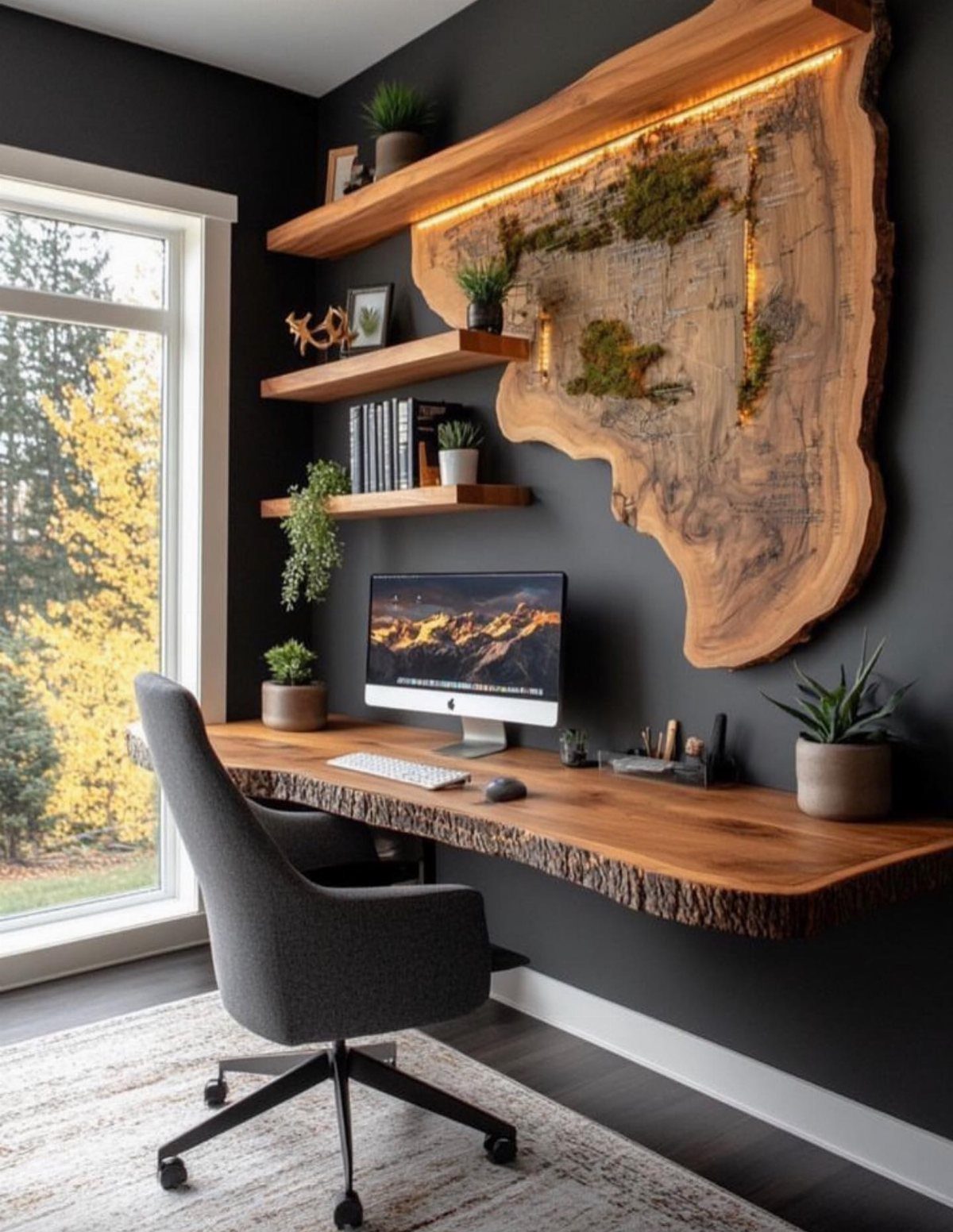
A live-edge desk gives a dark grey office the feel of a mountain lodge, because the uncut natural edge reads as rough and deliberate at once.
Keep the rest quiet: a plain grey chair, a few plants, and organic wall art that echoes the wood’s shapes.
Set the desk beside a window so daylight shows off the grain against the dark wall. I would choose a thick slab with a clear finish, which protects the wood and keeps the grain visible.
Buy the slab before you choose the paint.
16. Geometric Designs in Decor
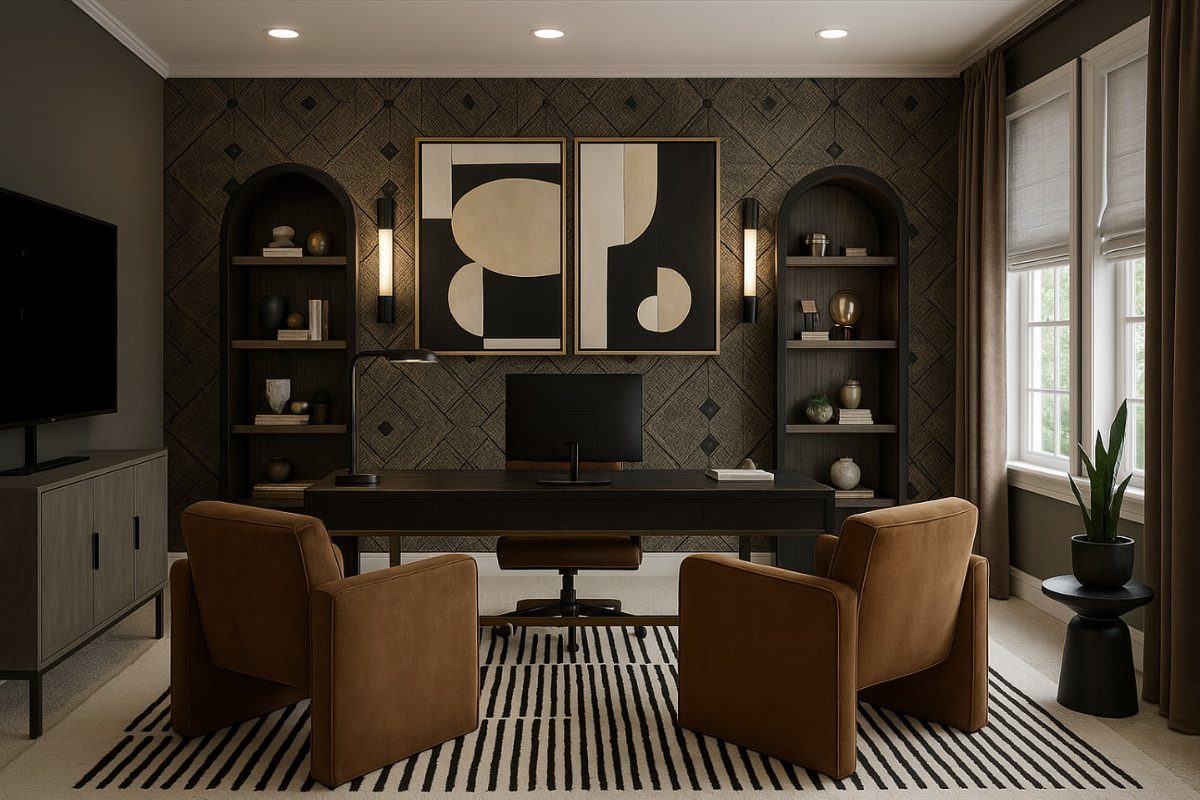
Geometric wallpaper on the wall behind the desk adds visual interest in a small dose, and leather chairs in a warmer tone balance the pattern’s sharpness.
Echo it once with abstract geometric art, and stop there. More than one repeat starts to compete with the wallpaper.
In a rental, peel-and-stick wallpaper is the version I would try first, since it comes off without damaging the wall.
17. Monochromatic Decorations
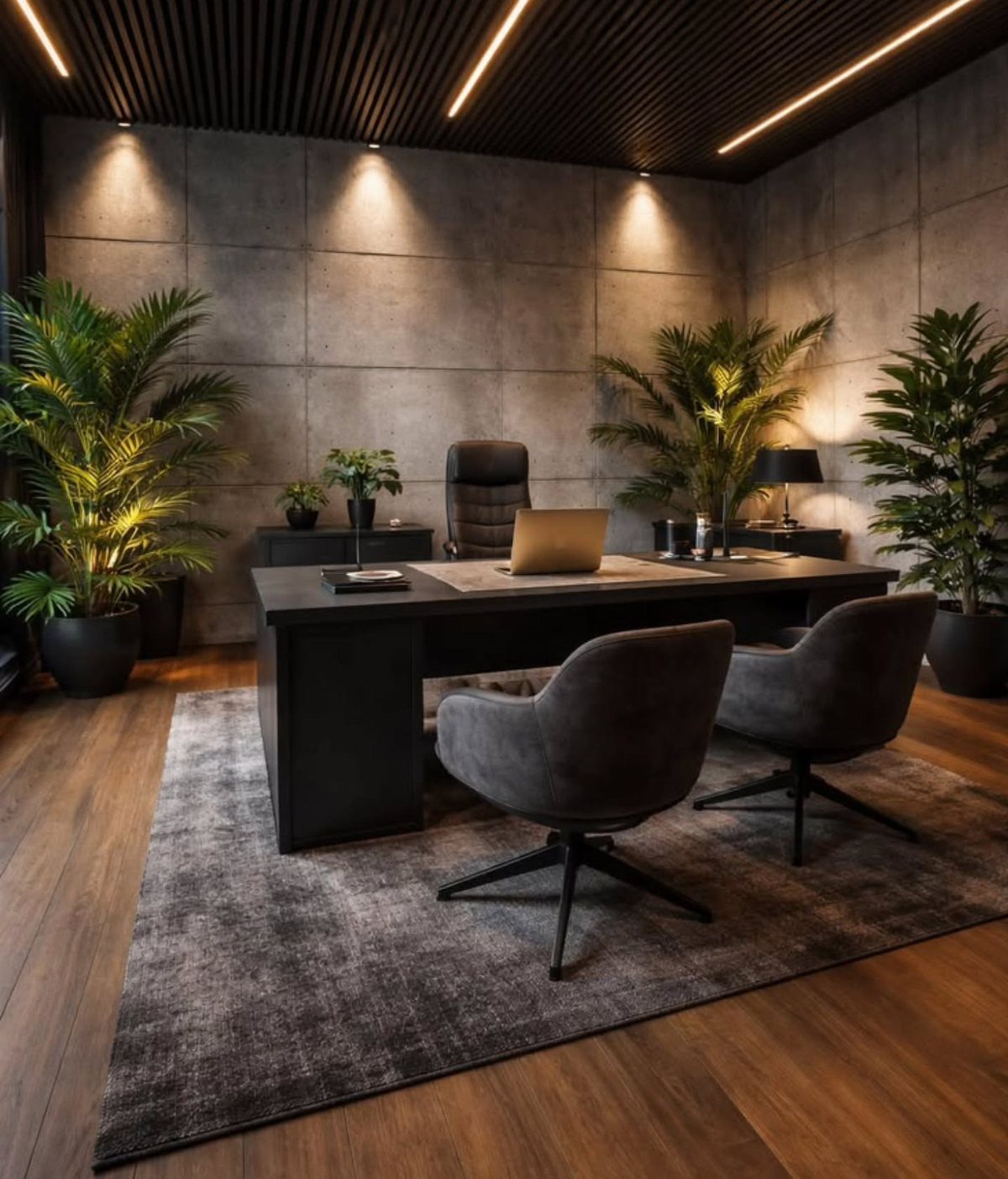
Black, grey, and concrete in one room read as calm, and a monochrome office lets texture do the work that color usually does.
A black desk, grey chairs, and a grey rug each sit at a slightly different depth of tone, so the room stays layered rather than flat.
Large green plants are the one exception worth making. They give the greys something living to push against.
Choose plants with big leaves, since they hold their own against the heavy tones better than small ones do.
Tips for a Productive Workspace
Different jobs need different light, so plan zones instead of one fixture. Position a desk lamp right where you’re writing or reading so it hits the surface without bouncing glare off the monitor.
A floor lamp in the corner turns an armchair into a second work spot when you need to step away from the desk. That small move also tells your brain the desk is for focused work only.
Light the inside of closed cabinets if you want to grab what you need without pulling everything forward first.
Choose dimmable bulbs where you can, since the right brightness changes with the time of day and how much daylight the room gets.
Good light eases eye strain on long sessions, which does more for stress than most decor. Pair it with a tidy desk and a plant, and focus comes easier.
Choosing the Right Desk
Measure before you shop. Tape the desk’s footprint on the floor, then check that you can still pull the chair out and walk around it.
A desk with real surface area means you’re not constantly shuffling papers to make room for the keyboard.
Bigger is not always better, though. A massive footprint that crowds the room loses to a smaller desk that works, and the desk and chair set the proportions for everything else.
If the room has a window, place the desk near it. Placing the desk near a window pulls your eyes up from the screen naturally, and it anchors the layout without trying.
A sleek design in a neutral color is the safest pick, since it goes with nearly any interior you add later.
Balancing Masculine and Feminine Elements
Contrast is what keeps a heavy, masculine office from feeling flat.
Brass hardware on dark cabinetry does the same job in a smaller dose. It adds warmth without changing the structure of the room.
Keep the base principles firm: symmetry, strong material contrast, a limited palette, and minimal clutter.
Dark is not the only way to read as masculine. Clarity and control matter more, so one soft piece is plenty.
Frequently Asked Questions
How do I decorate my home office?
The desk and chair sit under you for most of the day, so get those right before you think about anything else.
Then pick a limited palette such as navy, charcoal, or forest green, and layer the lighting with a desk lamp and warm soft bulbs.
Add one plant and one piece of art, and clear the desk each day so it stays easy to sit down and work.
What does every man need in his office?
Put a desk big enough to hold your monitor and keyboard without crowding, and a chair that lets you change the height and lock the backrest angle.
Add a lamp that sits to one side instead of behind the screen, and storage that closes so the cables and paper stay out of sight.
A single plant adds life without crowding the workspace. If you can afford only one of them now, spend it on the chair.
What color schemes are most effective for a masculine office?
Deep forest green, navy, and charcoal work best, and black can work in a room that gets a few points of light.
Carry the same color across walls and built-ins so the room feels wrapped, and stick to matte or eggshell paint that won’t bounce light back into the monitor.
Paint a test square and check it at night with your desk light on, since dark tones change a lot once the sun goes down.
What makes art look masculine?
Contrast and framing matter more than subject. Black-and-white prints, quiet color, and frames made from thick wood or flat black metal read serious without trying too hard.
One piece with space around it, such as a plain canvas with a short phrase, reads stronger than a crowded gallery.





