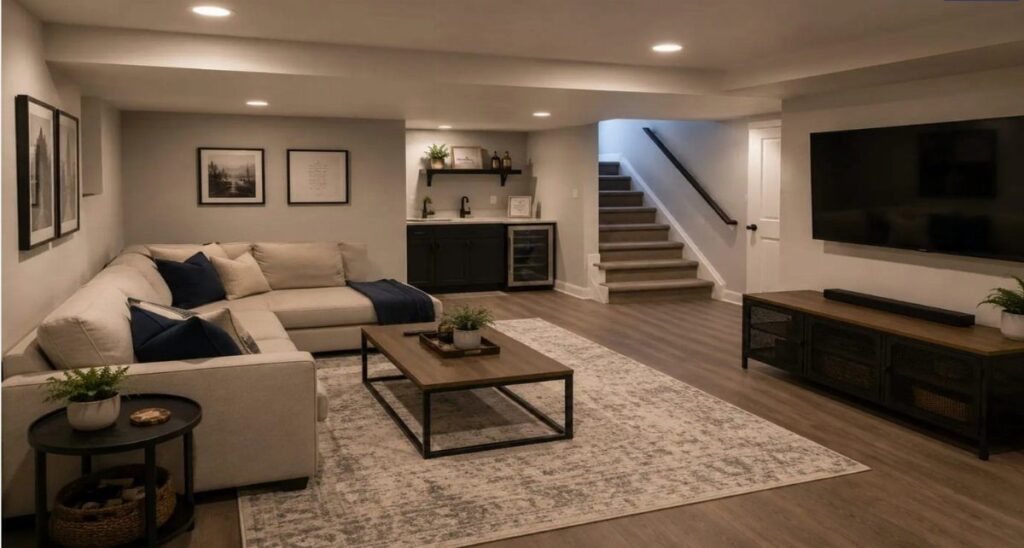
Ceiling height and water decide which of these ideas is yours: a low basement wants light paint, shallow shelves and a task lamp, while a damp one needs the source fixed before anything else.
The list runs from mirror-and-pale-surface fixes that suit renters to a built-in wine unit under the stairs or a barn door hung on solid framing.
1. Compact Home Office Desk
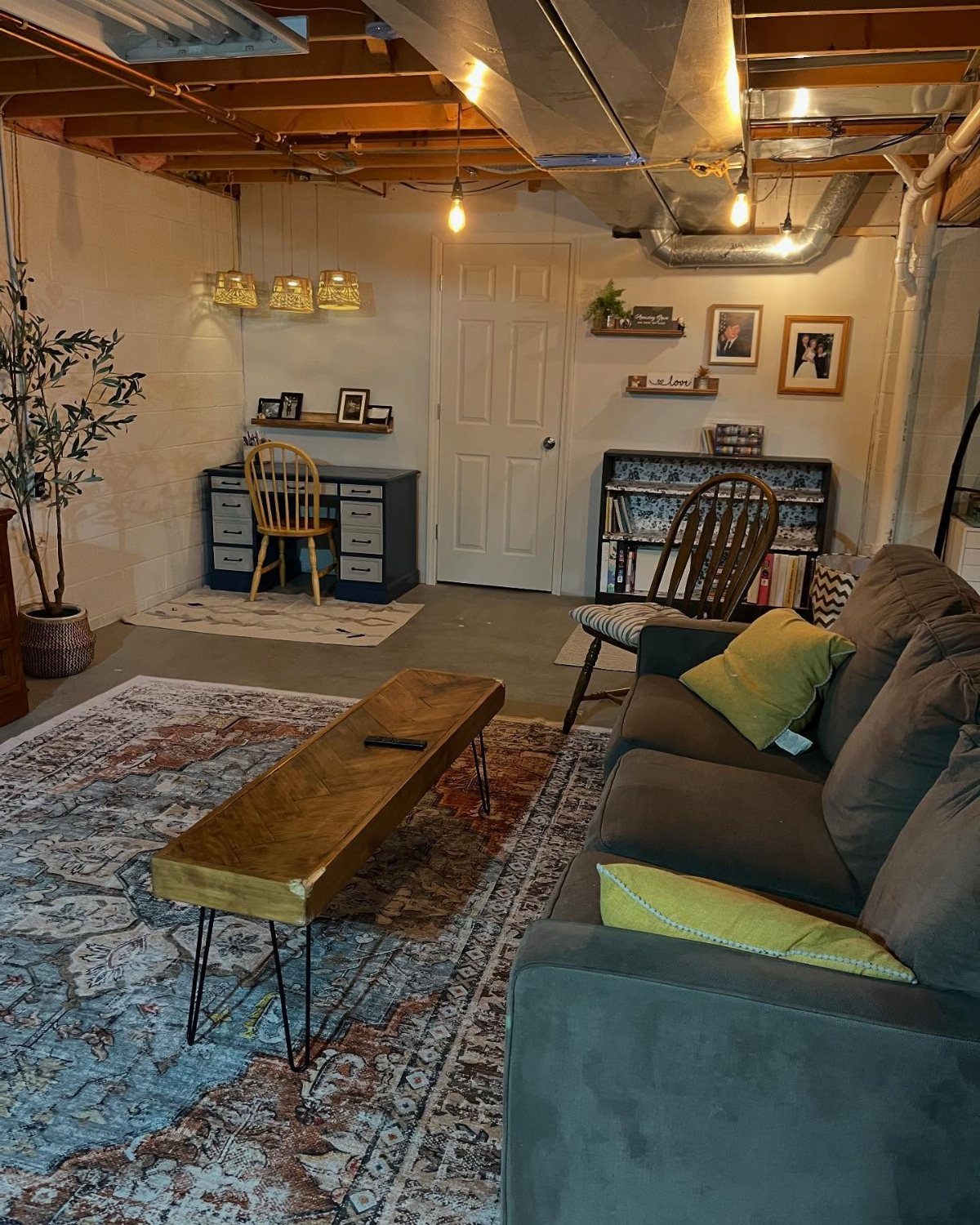
Pushing it to the edge keeps the sofa and coffee table zone open.
Color helps here. A painted desk in a bold shade reads as a deliberate accent, so the workspace feels like part of the room rather than a corner left over.
Exposed beams and ductwork leave less headroom, so keep shelves above the desk shallow, or skip them. A single task lamp on the desk does more than overhead light in a low space.
2. Kids’ Playroom with Play Structures
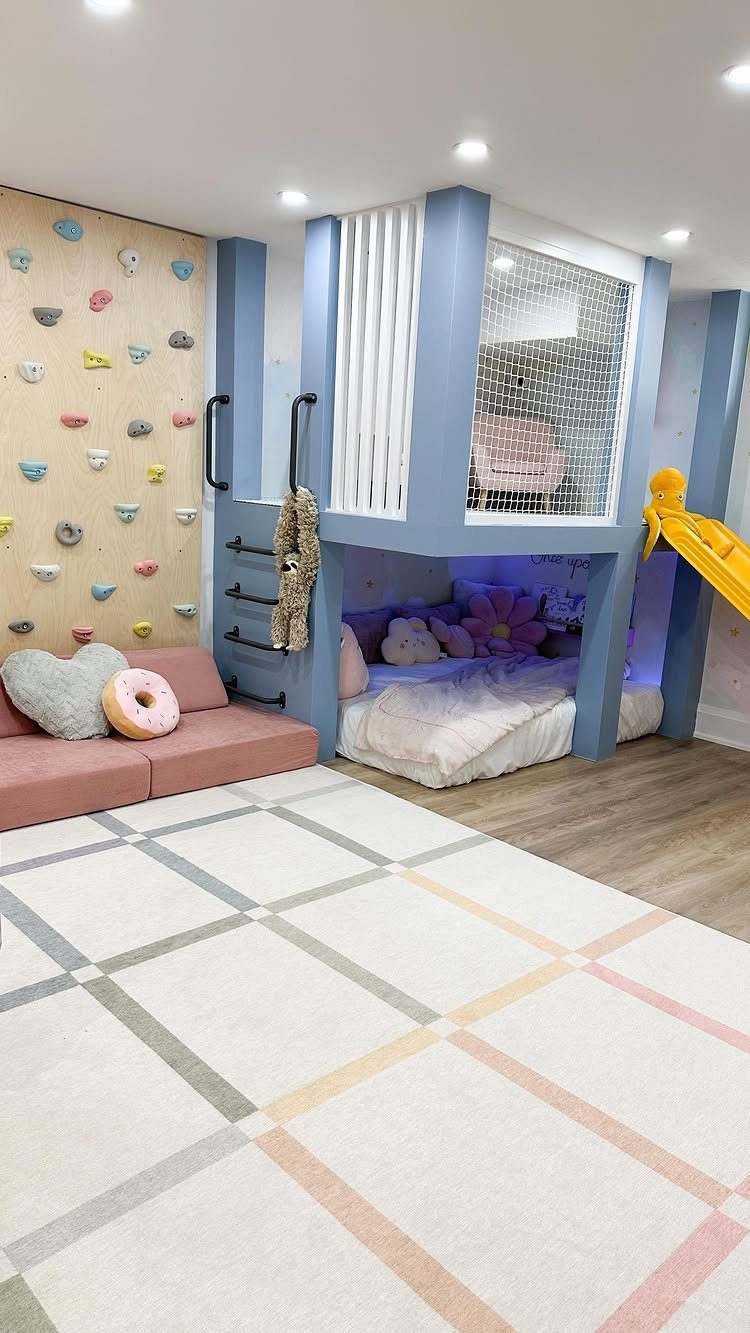
Climbing walls and loft beds with slides turn a basement playroom into somewhere kids actually go, and they use vertical space instead of floor. In a small room, that matters more than any toy bin.
Bolt anything structural into framing, never drywall alone. A loft bed with a slide is the better buy if the room also has to sleep a kid, since the floor underneath stays free for play.
Soft flooring is the one thing I would not skip: a patterned rug or foam tiles over the concrete cushion falls and cut down on cold. A sofa small enough for one adult to sit and watch is plenty.
3. Cozy Den with Minimalist Furniture
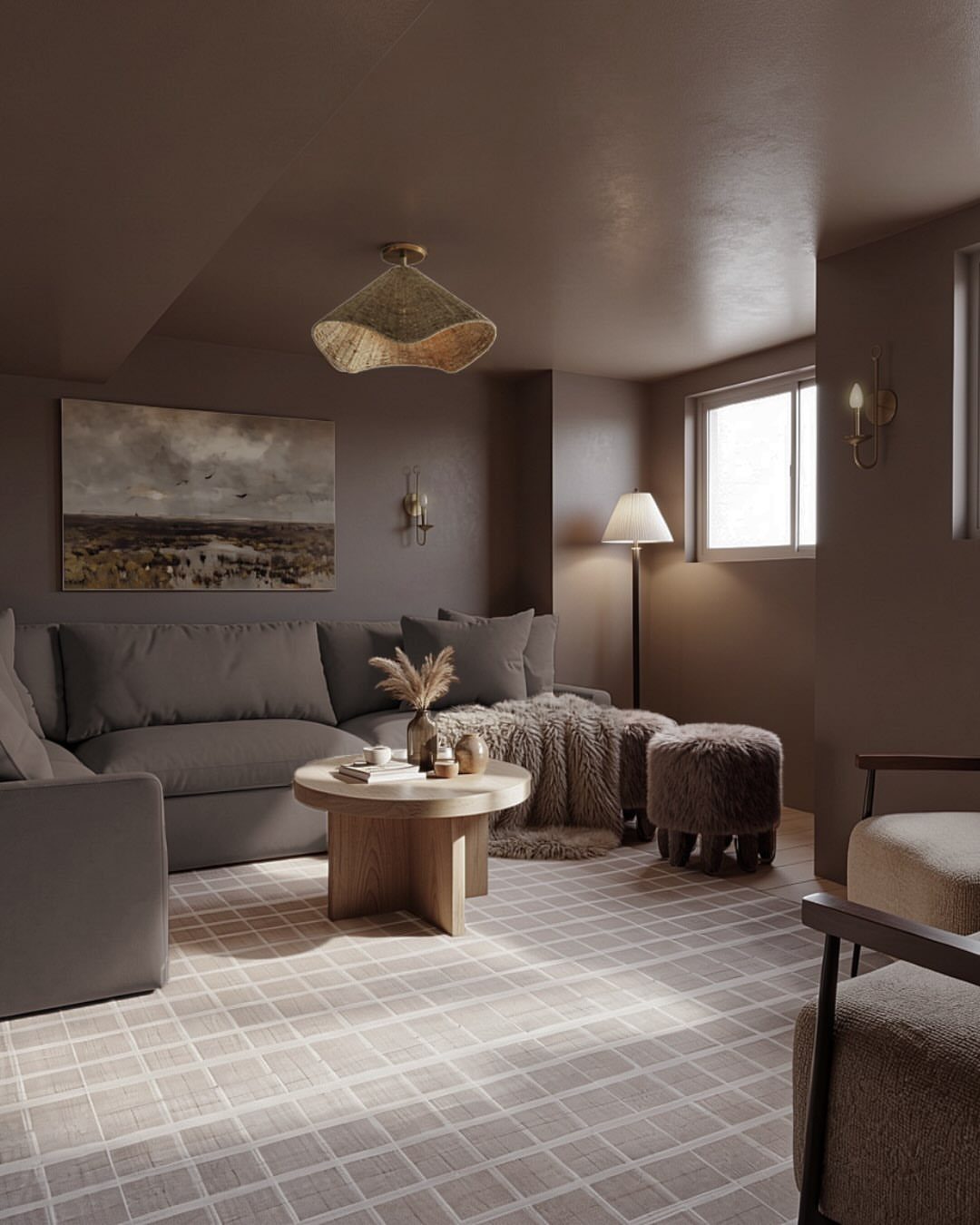
Muted brown walls make a small den feel like a cocoon rather than a cave, which is exactly why dark colors can work in a basement. Pair them with a few well-sized pieces instead of many small ones.
One sectional beats a sofa plus two chairs, because it defines the seating in a single footprint. A round coffee table keeps corners from catching shins in tight walkways.
Layer texture, not clutter: a rug with a simple grid pattern, soft ottomans that double as extra seats, and one large piece of art on the wall. That is a full room with very little to buy.
4. Cozy Guest Bedroom
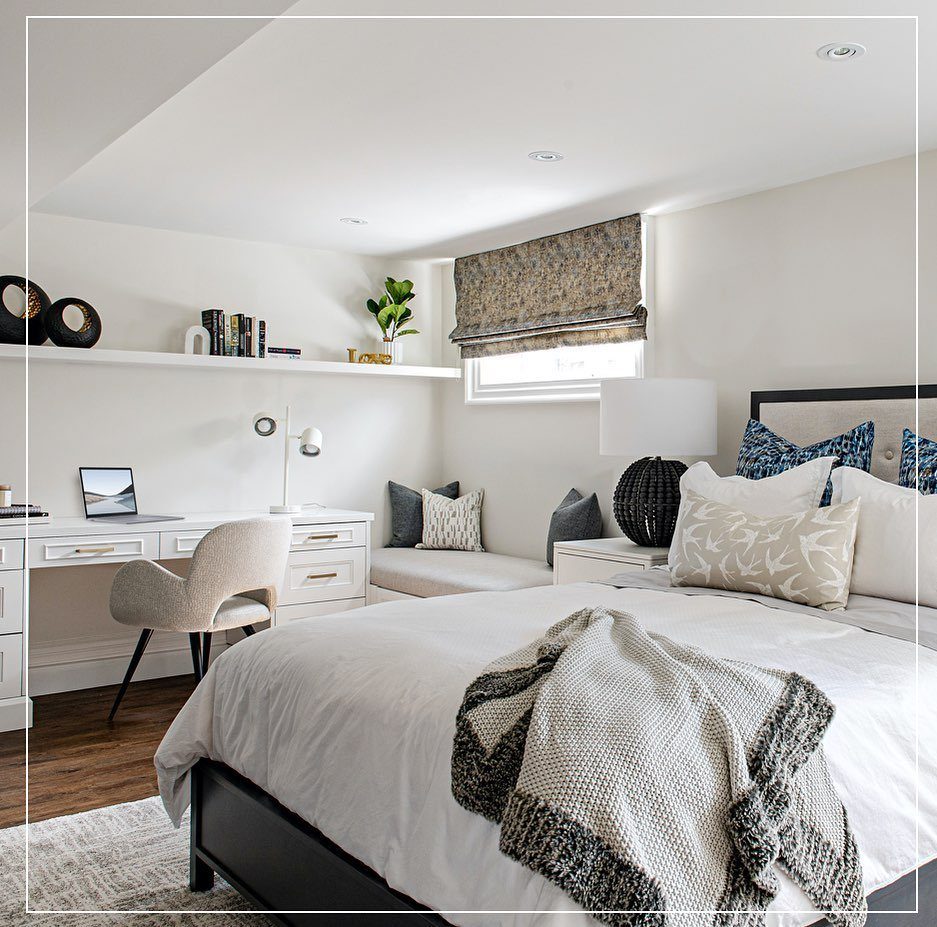
A basement guest room needs 3 things to feel like a real bedroom: a proper bed, somewhere to put a bag, and a spot to sit that isn’t the mattress.
A small desk with a laptop lets the room double as workspace between visits, which makes the square footage earn its keep. A window seat adds a perch plus storage underneath if you build it with lids or drawers.
Skip heavy furniture. A shelf for books and a few decor pieces is enough, and leaves walking room around the bed.
5. Wall Mirrors
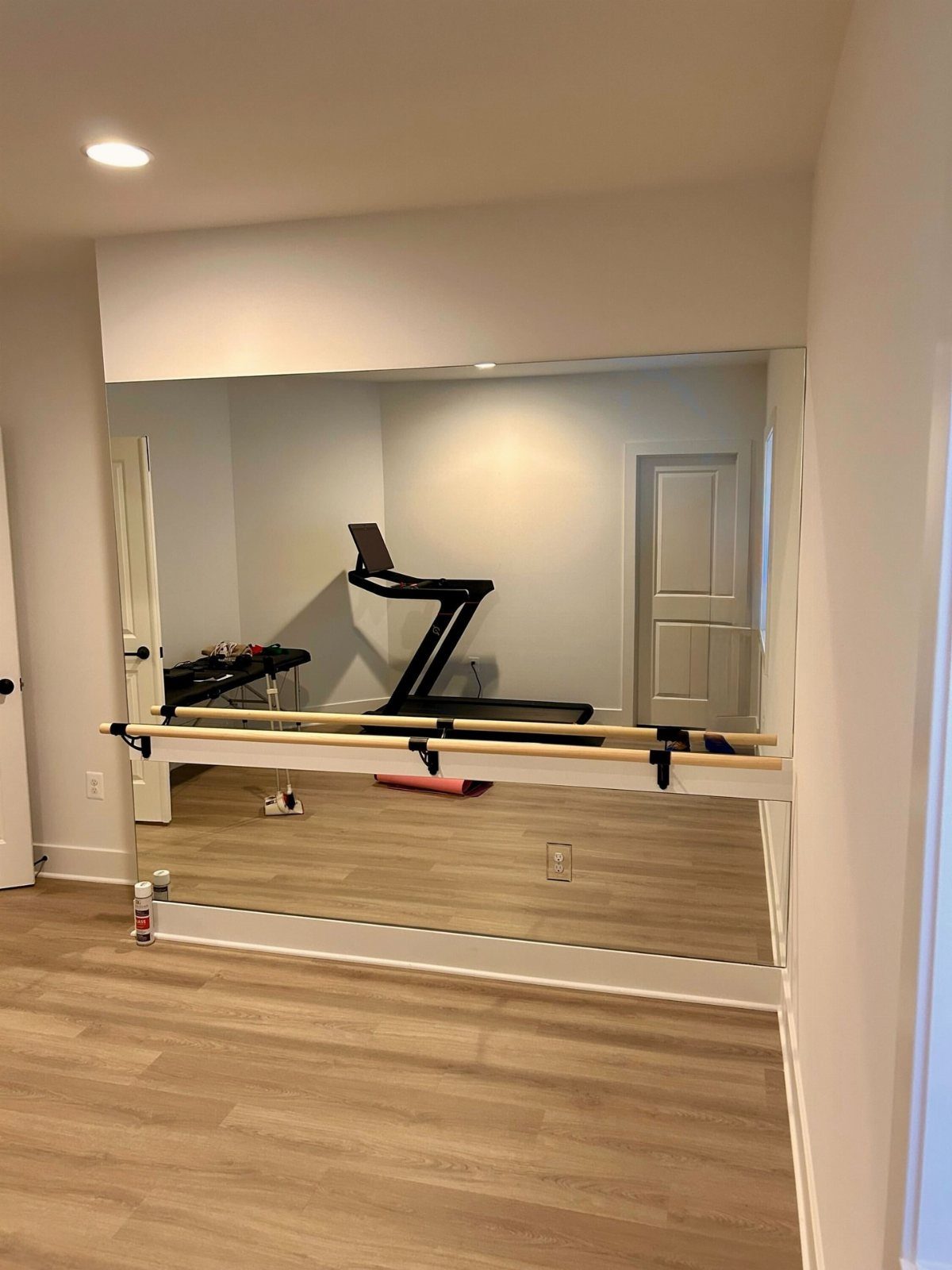
In a basement gym, a big wall mirror does 2 jobs: it lets you check your form and it makes a narrow room look wider. Add a wooden ballet barre along it and the same wall serves stretching and dance.
Mount the mirror to studs or with proper anchors, since glass is heavy and a basement wall may be masonry. Run it from low on the wall to well above head height so it works for squats and stretches.
Light wood floors help the room feel airy. Keep the treadmill and bench to one side so the mirror has open floor in front.
6. Light Paint Colors on Walls
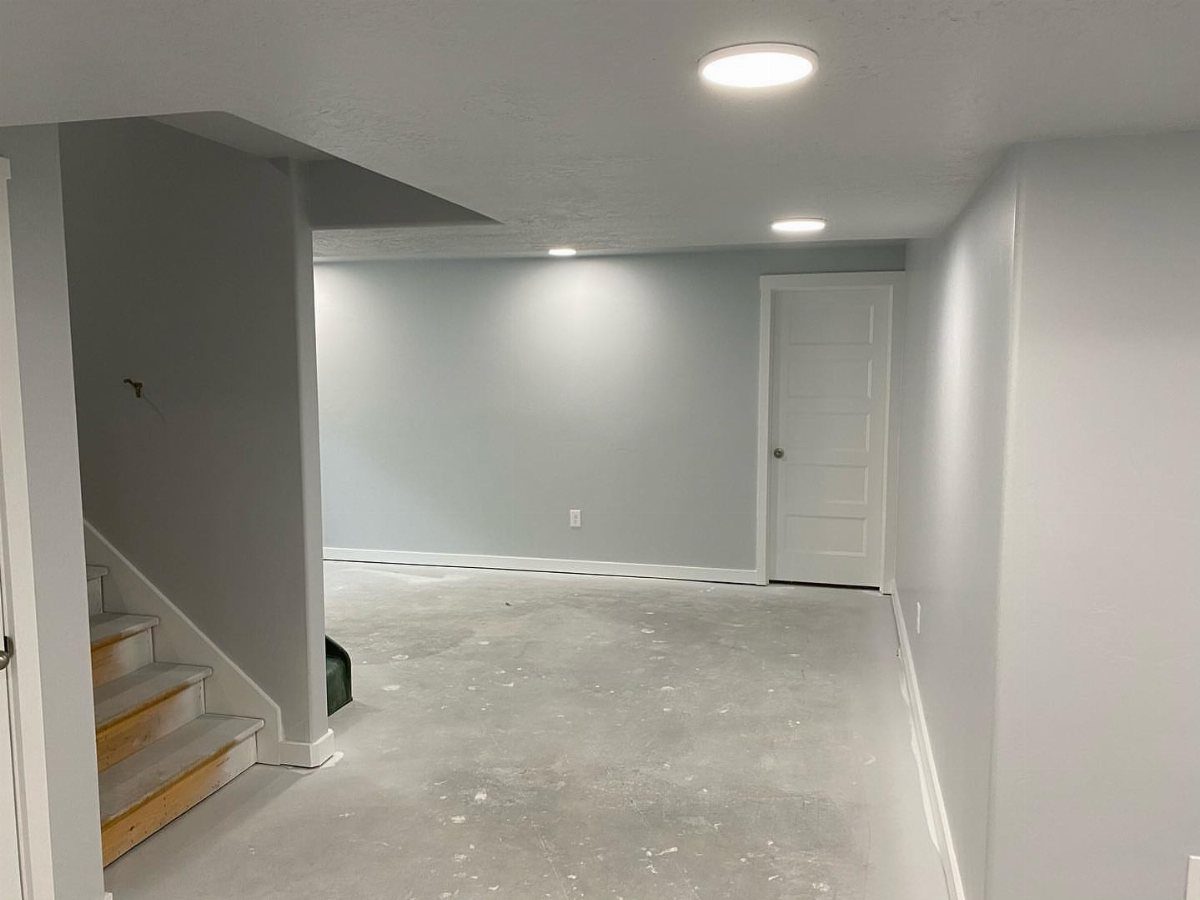
Light paint is the cheapest way to make a low basement feel taller, and a pale gray with white trim is hard to beat. It bounces what little light there is, including recessed ceiling lights.
Paint the trim and door in the same crisp white so edges look clean. A matte or eggshell finish hides wall flaws better than gloss.
Concrete floors read cold against pale walls, so plan a rug or flooring later. On bare walls, I would prime first, since basement surfaces drink up paint.
7. Home Theater with Projection Screen
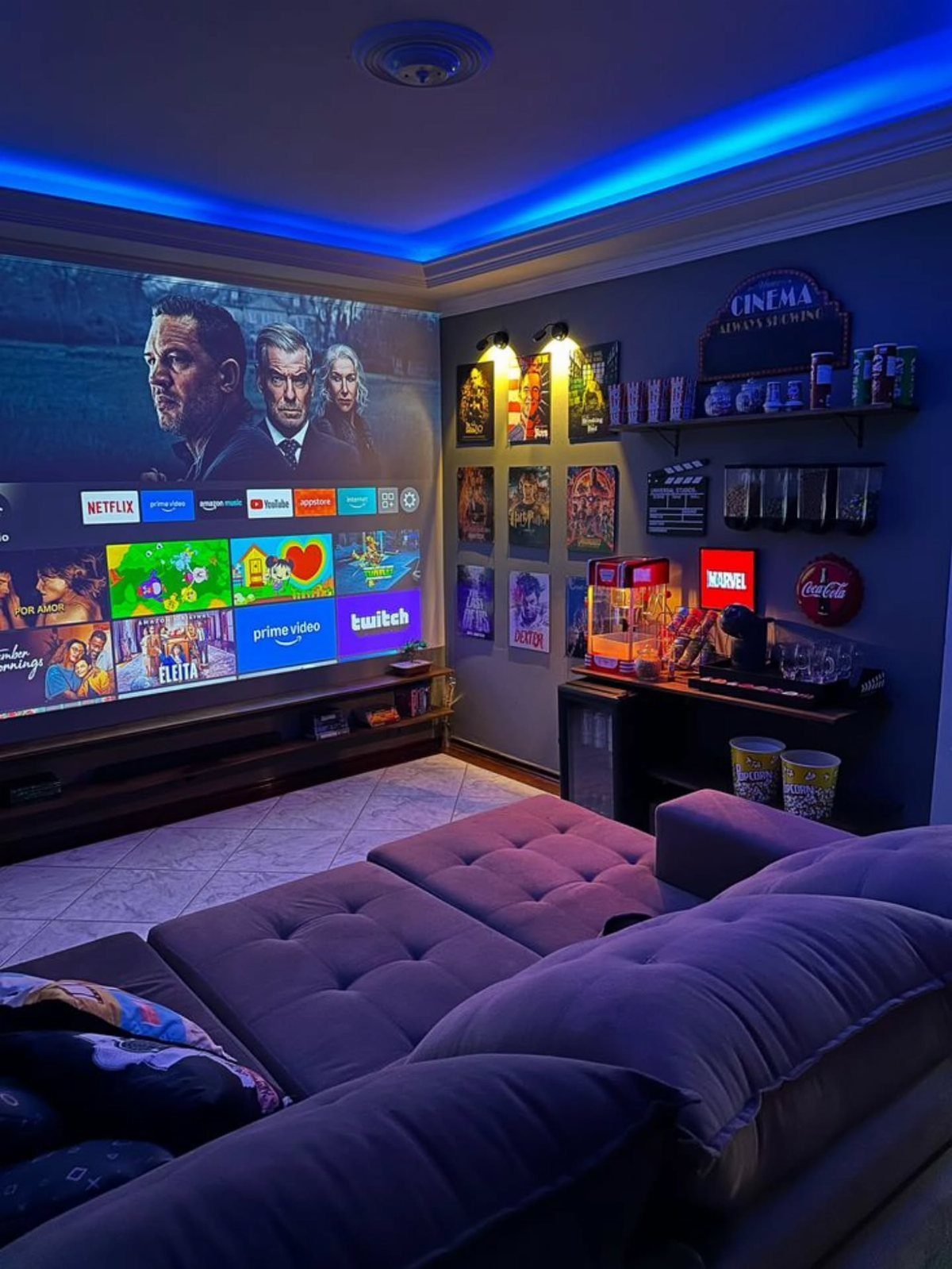
Blue LED strips along the ceiling do most of the work in a basement theater, because they let you kill the main lights without losing the walkway.
Put them on a dimmer or a remote so the room can go from movie night to cleanup in one click.
A sectional fits a small room better than separate chairs, and a deep color like this purple hides snack spills. Hang posters on the side walls, not the screen wall, so nothing competes with the picture.
A popcorn machine is the cheap detail that makes the room feel like a cinema.
8. Area Rugs
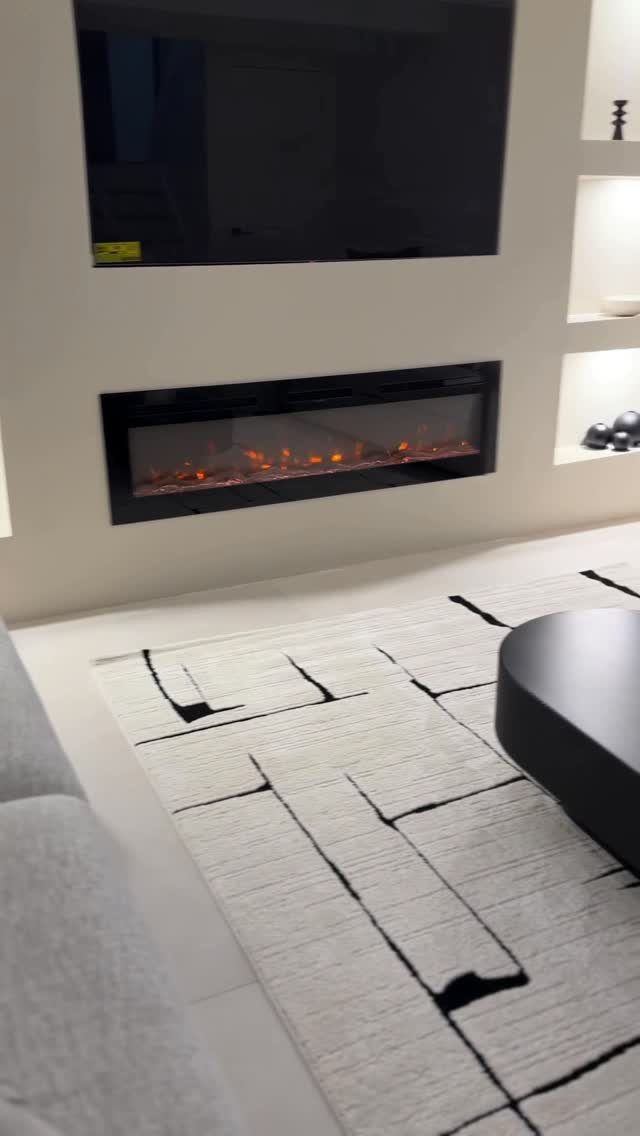
A graphic rug in black and white can anchor the room when you’re working with furniture you already own. Placing the rug under the seating group separates that zone from the rest of the basement.
Size it so the front legs of the sofa sit on the rug. Anything smaller looks like a doormat.
Geometric patterns are forgiving, since the lines hide small shifts and wear. White shows dirt faster than most colors, so I would pick a low pile that vacuums easily.
9. Organized Laundry Room
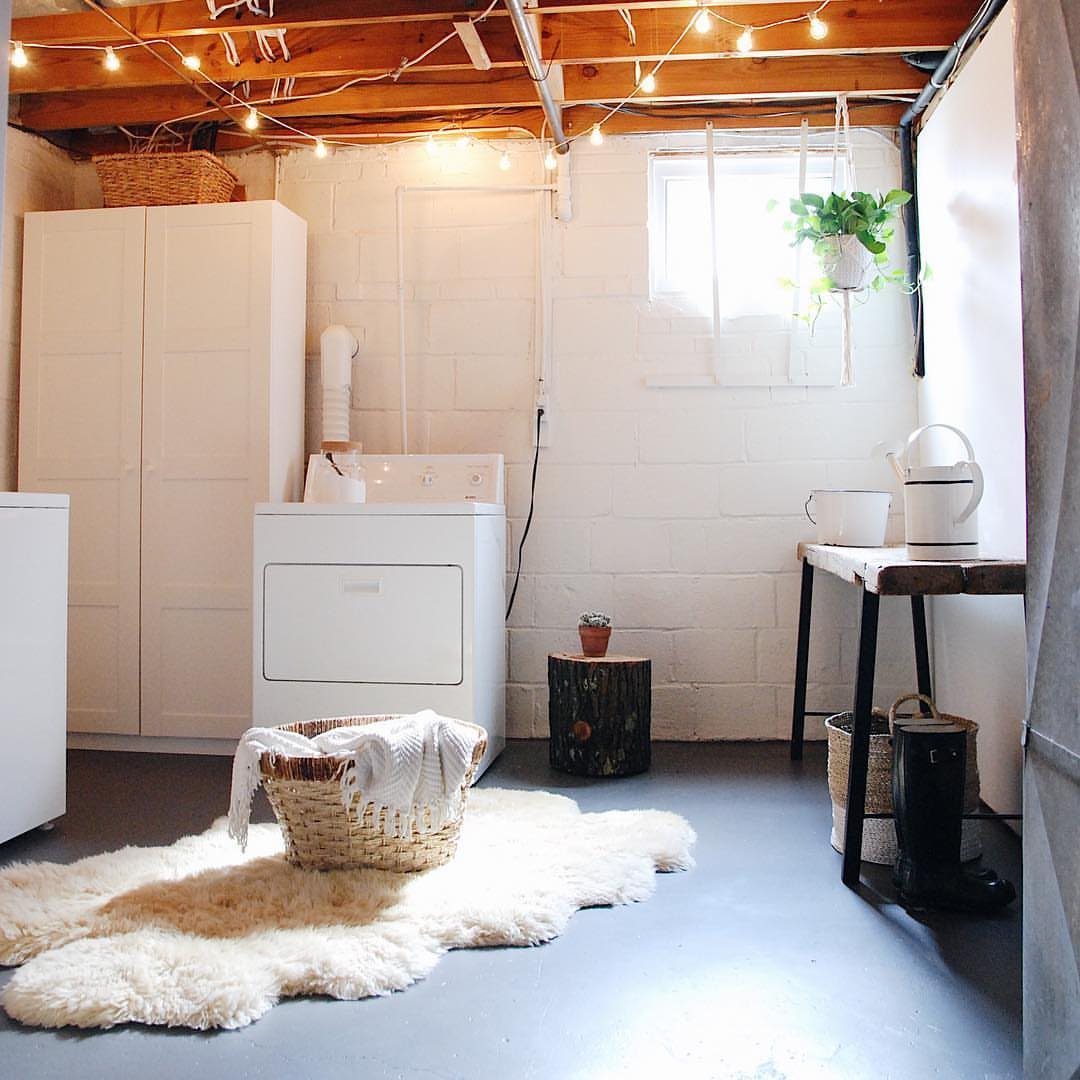
Even a small basement laundry corner works if every item has a spot. A white cabinet above or beside the washer holds detergent, and a small wooden table gives you a place to fold.
Exposed beams are fine to leave as they are. Painting them white keeps the ceiling from feeling heavy, and string lights are a cheap way to brighten the room without wiring a new fixture.
A faux fur rug is a good touch for bare feet on cold concrete. Choose one you can toss in the wash.
10. Wine Storage and Tasting Area
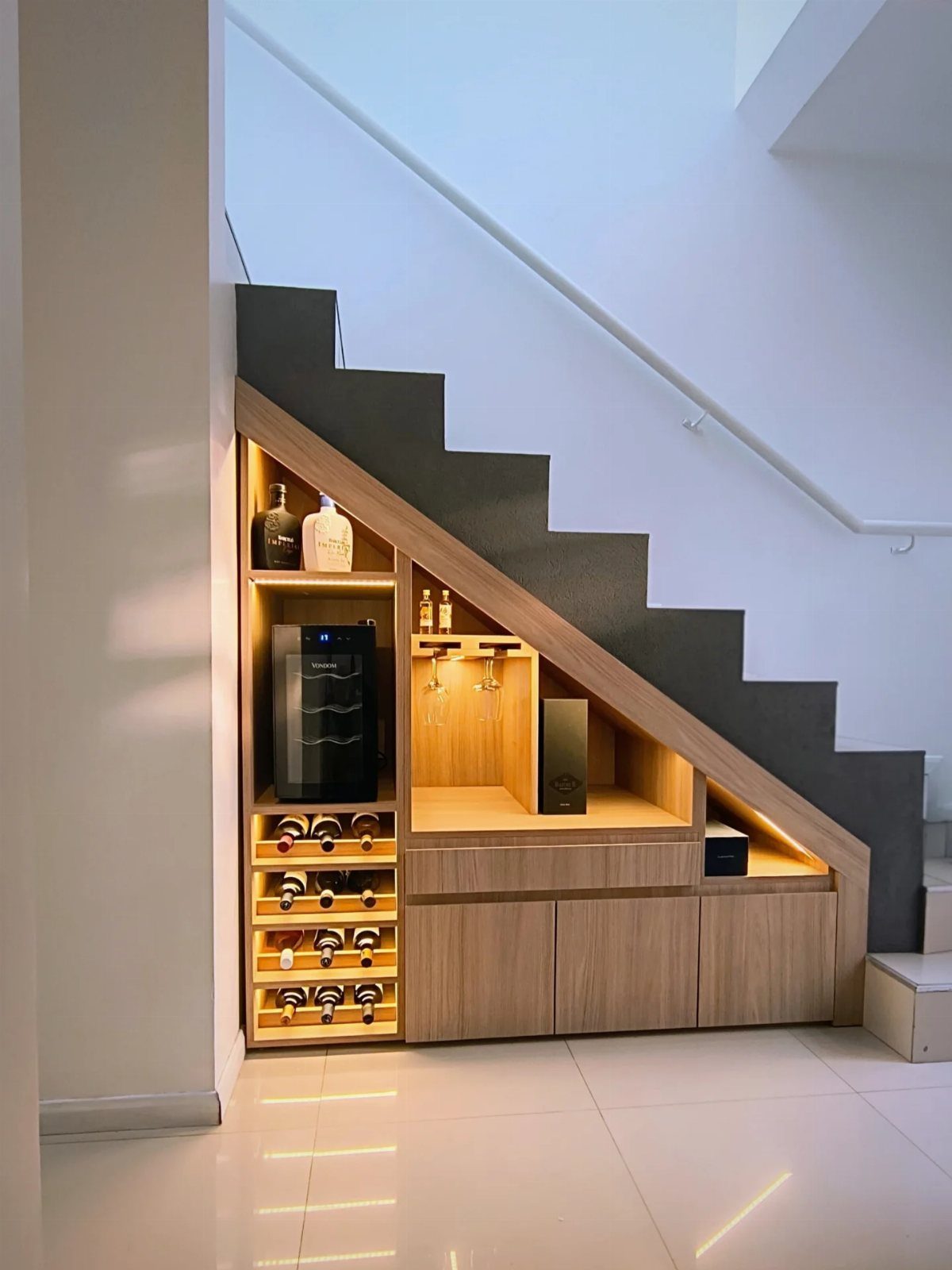
The space under a staircase is the best spot for wine, since it is usually dead storage anyway. Build a wooden unit with bottle racks on one side, a wine cooler at counter height, and a shelf for glassware.
Add small integrated lights so the bottles show up in a dim basement. Warm bulbs look better than cool white.
A freestanding cooler is cheaper than building one in. Measure the opening first and leave room for the unit to breathe on the sides.
11. Compact Bar with Seating
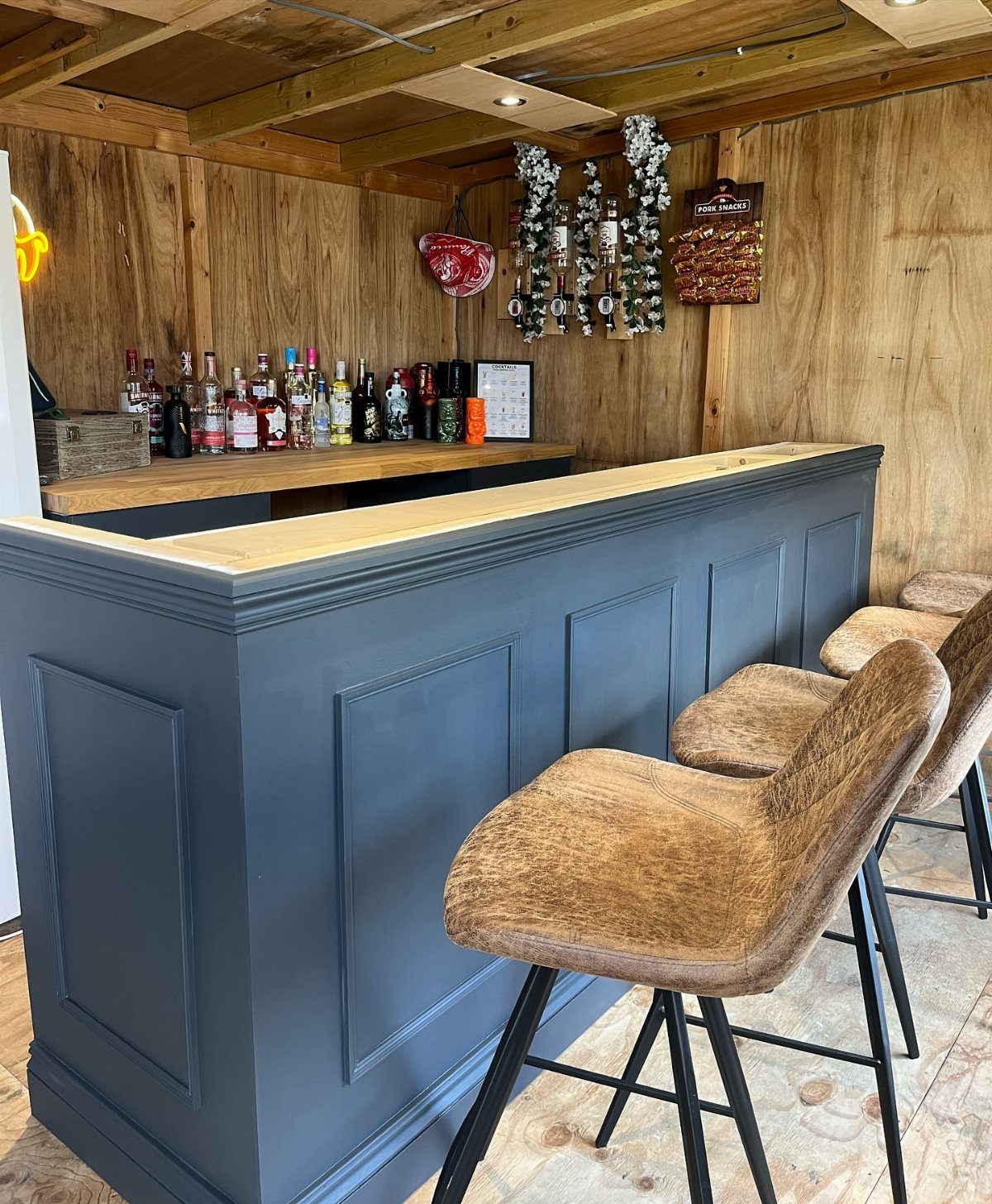
3 stools are all a compact bar needs. A grey paneled counter with a wooden top reads as a real bar, and it holds bottles and snacks without taking much floor.
Leather-look stools with a textured finish wipe clean, which matters near drinks. Pick a stool height that matches the counter, so knees don’t hit the panel.
Wood paneling behind the bar adds warmth and gives a corner a pub feeling even in a small footprint. A funny sign, like the snack one here, adds personality for almost nothing.
12. Built-In Shelving and Wall-Mounted Cabinets
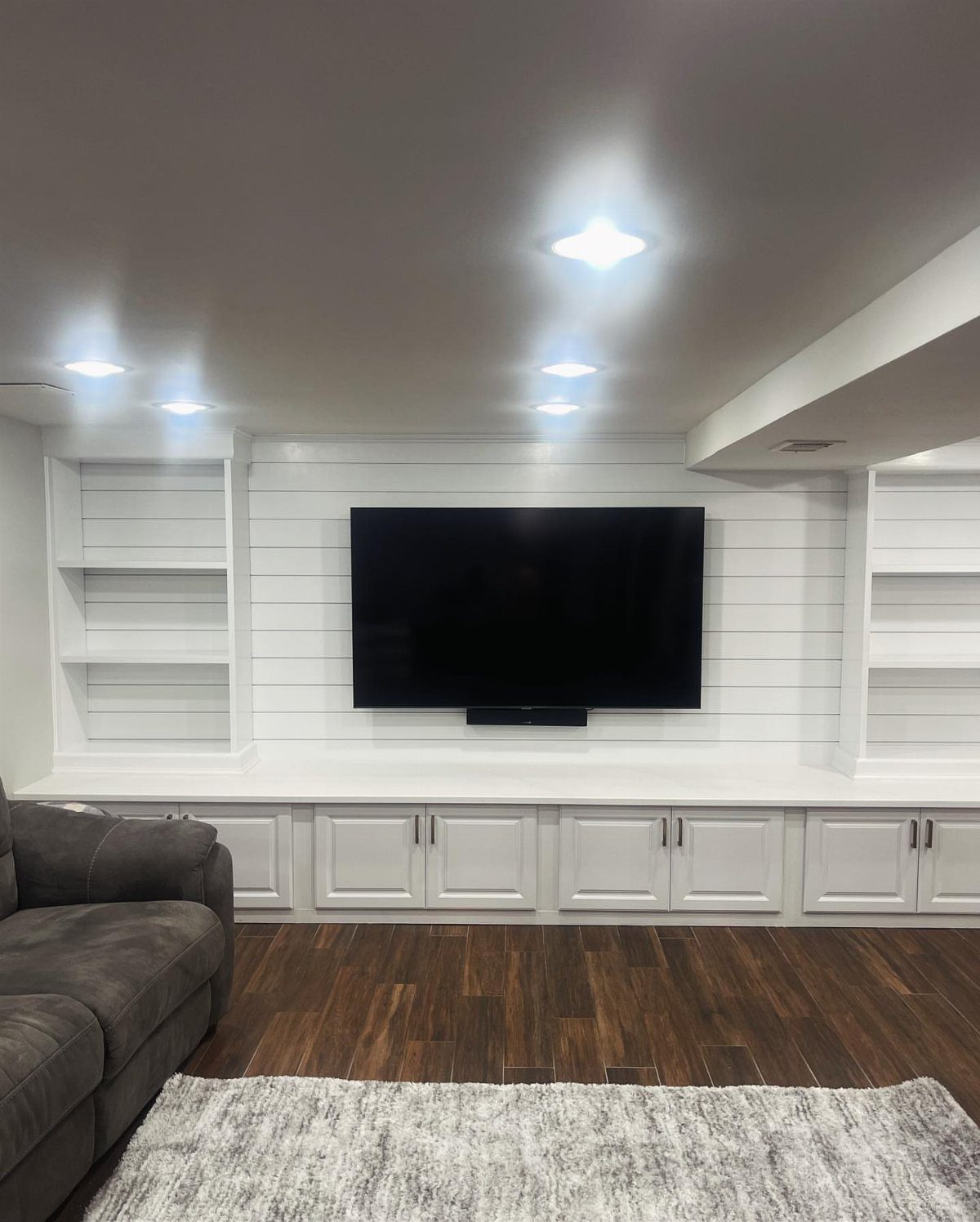
Built-in shelves and a long row of white cabinets around a TV turn one wall into storage for games, books, and cables. Open shelving on the sides keeps the look light, while the closed cabinets below hide clutter.
Painting everything white to match the shiplap makes the unit blend into the wall, so it feels bigger than it is. Dark floors give the white a nice contrast.
Mount the TV on the wall rather than a stand. That frees the cabinet tops for lamps and decor.
13. Craft Room Workspace
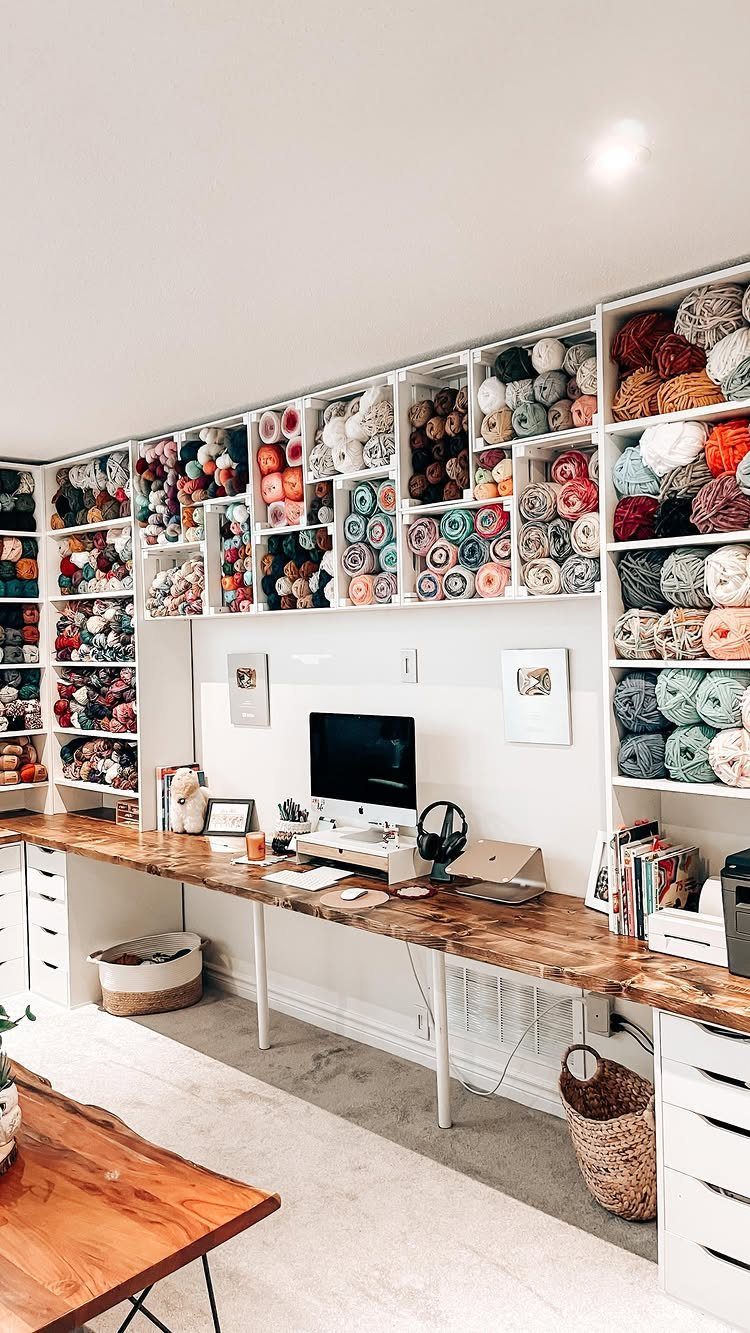
A long desk with shelves running wall to wall gives a craft room its storage and its work surface in one line, which suits a small basement better than a desk plus a separate cabinet.
Yarn on open shelves doubles as decoration, so the supplies stay in sight and easy to grab.
White walls and carpet let bright fabric and supplies hold attention without competing finishes. Carpet shows dye and glue fast, so I would lay a washable mat under the work area.
A computer on the same desk handles patterns and orders without a second station.
14. Sliding Doors
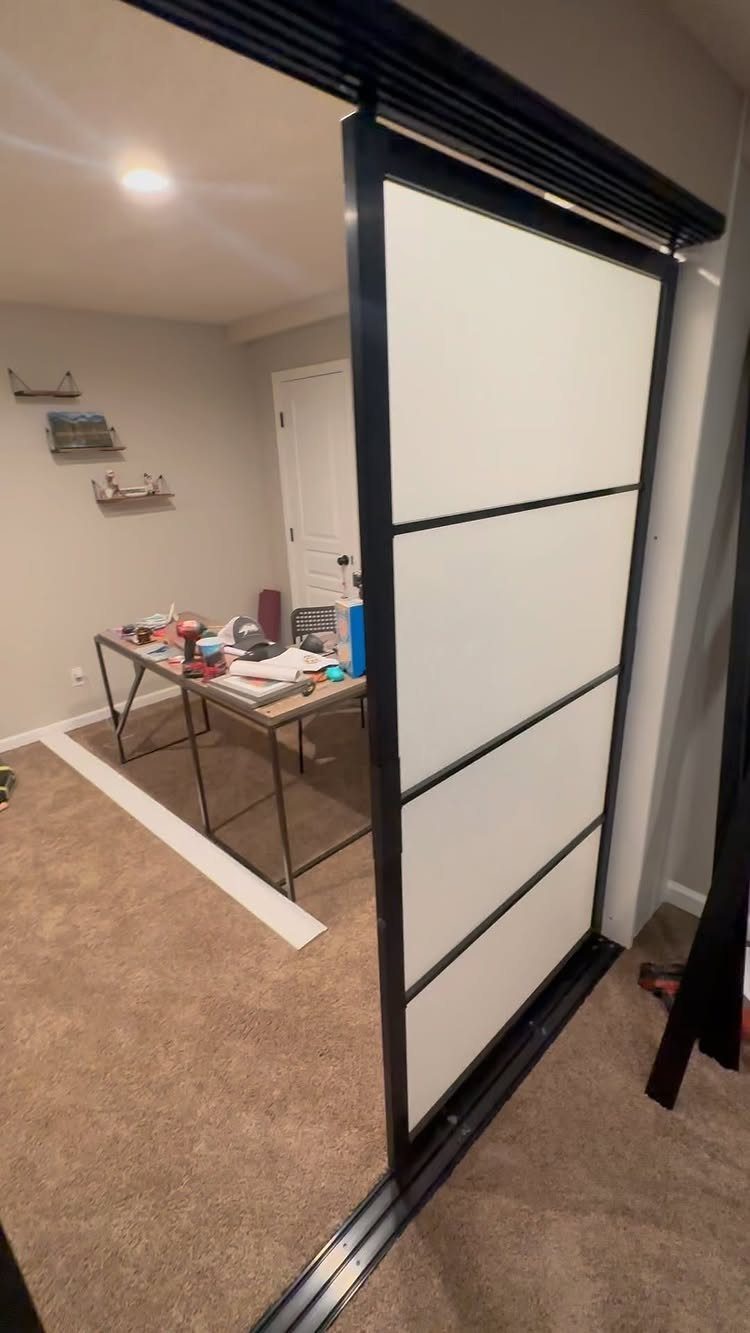
A sliding barn door suits a basement room because it needs no swing space, so a craft table or shelf can sit right beside the opening.
A white door with a black frame reads crisp against tan carpet and keeps the look light.
Hang the track on solid framing, not drywall alone, since the door is heavy. Leave a wall section beside the opening as wide as the door so it has somewhere to slide.
A barn door doesn’t seal sound or light the way a hinged one does, so it works better for a hobby room than a bedroom.
Assessing Basement Potential
Before you settle on a layout, get a structural engineer or contractor down there to confirm what you’re working with. Moisture, water damage, and foundation problems are cheaper to find now than after the drywall is up.
Check for damp spots, white mineral residue on the concrete, and musty smells. Any of these means the water source gets fixed first, because finishing over a wet wall hides the problem until it turns into mold.
Call your local building department too, since zoning and permit rules vary by city. A bedroom, for example, usually has to meet separate requirements, so ask what your plan needs before you buy materials.
Renters should skip the structural work and ask the landlord what is allowed.
Maximizing Natural Light
Natural light is scarce in a small basement, so every source counts. Add windows where the foundation allows, consider a well-placed skylight, and use light-reflecting surfaces to carry daylight further into the room.
A walkout basement has the biggest advantage. Large glass doors make even a small room feel bigger, and a wall-to-wall sliding door ties the space to the yard.
If your basement is fully below grade, a new window is a bigger job. Cutting into a foundation wall calls for a contractor, so get a quote first and treat it as a larger project than a weekend.
Renters can still help the light along with mirrors and pale surfaces opposite whatever window exists.
Choosing the Right Furniture
Scale decides whether a small basement feels open or stuffed.
One oversized armchair sticks out, while pieces sized to the room make it read larger and brighter. Apartment-scale furniture fits these spaces better than full-sized pieces, and most manufacturers make it standard now.
Go up when the floor runs out: wall-mounted shelving, built-in storage, and multi-level furniture. A tall bookshelf also adds a vertical line, which draws the eye upward.
Light upholstery keeps the space from closing in, so I stick with neutrals unless the basement has great natural light.
Before buying anything, tape the footprint of each piece on the floor and walk around it. If the path feels tight, the piece is too big.
Frequently Asked Questions
What are some easy ideas for finishing my basement?
Start with pale paint, a rug and good furniture scale.
A light gray with white trim bounces what little light a basement gets, and priming first keeps bare surfaces from soaking up the paint. A rug over the concrete adds warmth, and apartment-scale furniture keeps the room from feeling stuffed.
How do you make a small basement look bigger?
Paint the walls a light color and hang a large mirror opposite whatever light source the room has. Pale gray with white trim makes a low ceiling feel taller, and a mirror makes a narrow room read wider.
Go vertical with wall-mounted shelves and a tall bookshelf, and choose furniture sized to the room, since one oversized piece shrinks it fast.





